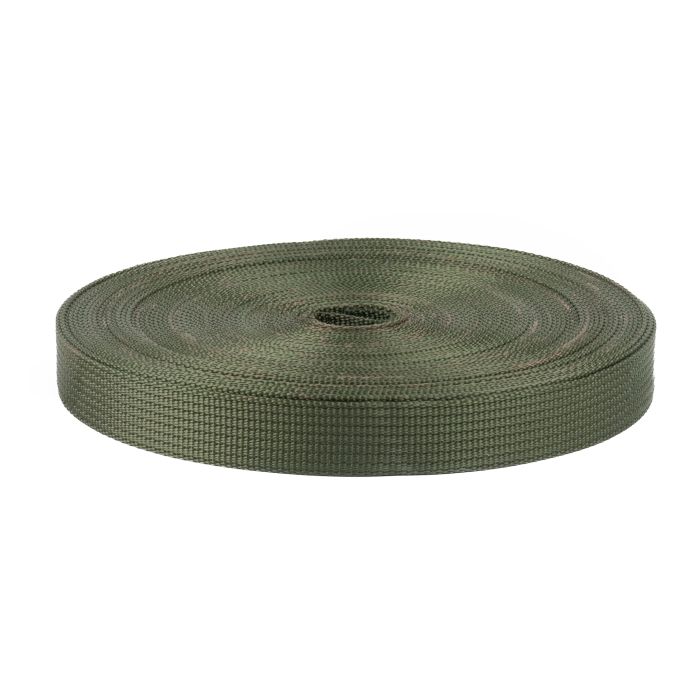
Reinforce raw edges and elevate the durability of tactical nylon gear with 1/2 Inch Berry Compliant Olive Drab #7 Nylon Binding. Crafted to meet MIL-T-5038 / MIL-DTL-5038 standards, this binding gives backpacks, pouches, vests, and slings the low-bulk edge finish that professional-grade gear requires. Sourcing follows Berry Compliant requirements, so every fiber is grown, spun, and woven within the United States, supporting domestic manufacturing from start to finish. Building your next batch of packs, pouches, or vests starts with materials you can count on, and this binding brings the consistency and strength that seam construction and pull-strap fabrication demand.
Woven from 100% nylon using Nylon 6 or Nylon 66 fibers, this binding is piece-dyed to achieve Olive Drab #7. Expect natural variation between batches, with some sections appearing lighter than others, a normal characteristic of piece-dyed nylon rather than a flaw. Thread count runs differently than typical bindings, giving the surface a slightly rougher hand feel that adds grip and texture during stitching. Measuring 1/2 inch wide, this binding folds cleanly over raw fabric edges and pairs well with webbing, hardware, and buckles used in parachute and military-style construction. Rolls arrive ready to cut and sew, fitting seamlessly into production lines that require consistent width and dependable folding performance.
Use this binding for edge finishing on packs, pouches, tactical vests, and slings, or for seam reinforcement and pull-strap fabrication where a clean, low-bulk edge matters. Sewers and manufacturers building parachute accessories and military webbing components will find the width and construction well matched to those projects. Keep in mind that raw nylon binding is not intended for climbing, rappelling, or other critical load-bearing applications, and finished tensile strength depends heavily on stitching, backing material, and construction method. As a general guideline, avoid exceeding 25 percent of the rated tensile strength of any finished assembly, and inspect each roll for factory splices, which can occur naturally during weaving. We recommend testing finished products under your application conditions before committing to full production runs.
 Our offices will be closed Monday, September 7th for Labor Day. Orders can still be placed online, and both customer service and shipping will resume Tuesday, September 8th.
  Review and Win! Share your verified review and get a chance to win a $25 store credit!