
A Complete Guide to Webbing Materials for Beginners
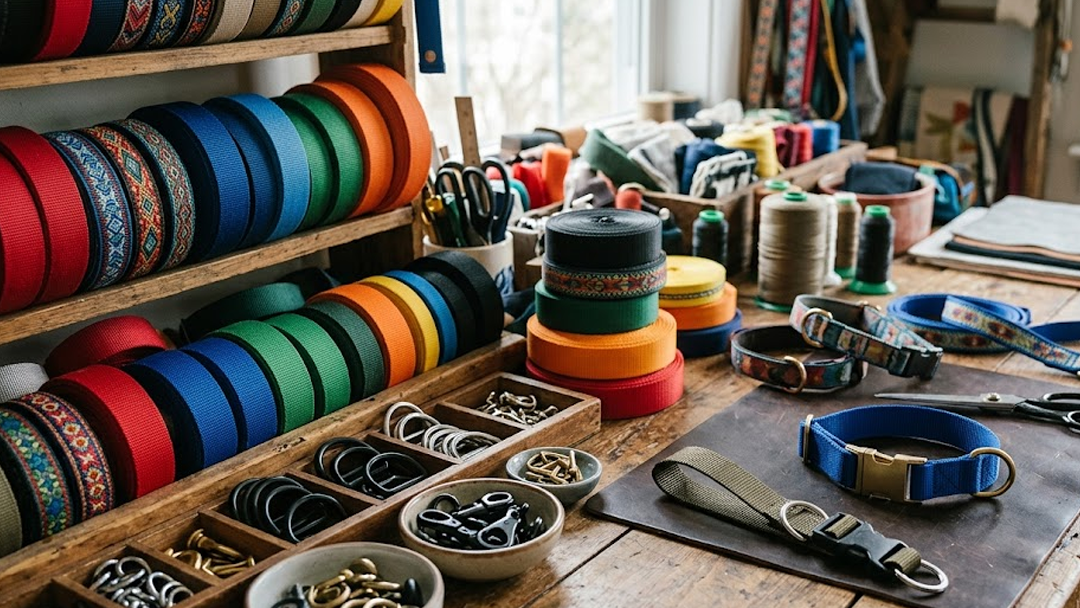
If you've ever grabbed a dog leash, clipped into a climbing harness, or slung a backpack over your shoulder, you've already had a hands-on introduction to webbing material. You just didn't realize it had a name. Welcome to the club. We're glad you're here, and we promise this is going to be more interesting than it sounds.
Whether you're crafting custom pet collars, repairing outdoor gear, or diving headfirst into a DIY project that your friends will either admire or politely question, understanding webbing materials will help you make smarter choices every single time. So let's break it all down, starting from the very beginning.
What Exactly Is Webbing Material?
Think of webbing as ribbon's tougher, no-nonsense sibling. While ribbon is busy looking pretty on a gift box, webbing is out there holding car seat belts together and keeping rock climbers attached to cliffs. Webbing is a strong, flat, tightly woven fabric made from fibers like nylon, polyester, polypropylene, or cotton, and it's specifically engineered to handle stress, resist wear, and stand up to genuinely harsh conditions.
You'll find webbing hiding in plain sight everywhere. Pet leashes, backpack straps, military gear, medical equipment, and outdoor furniture all depend on it. The reason webbing material has earned such a permanent place across so many industries comes down to one thing: it combines flexibility with serious strength. You can bend it, fold it, and sew it into almost any configuration, and it still won't give up on you.
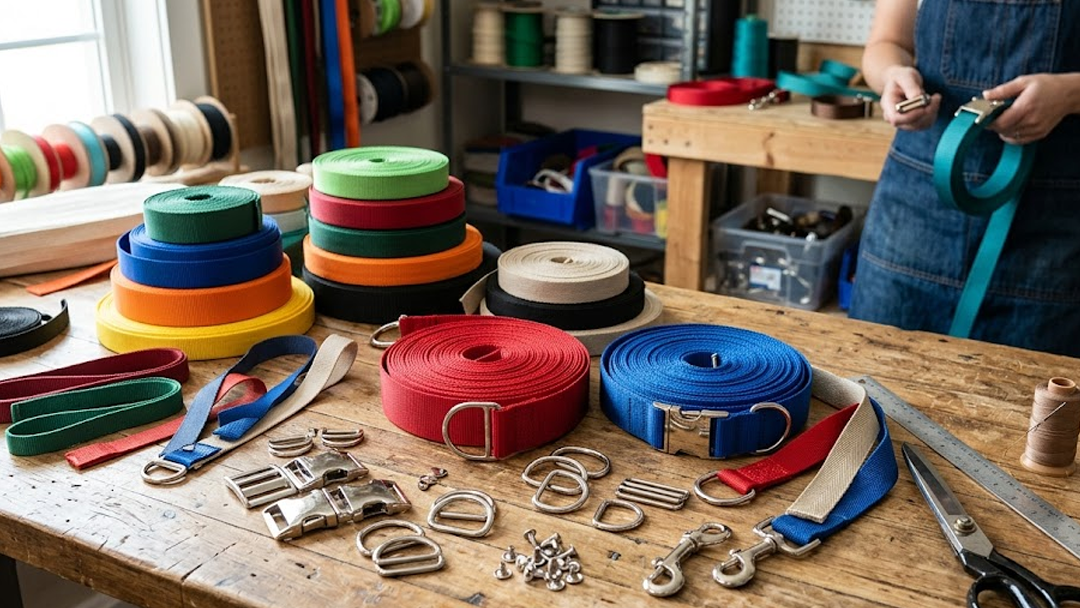
Width matters too. Webbing ranges from a slender quarter-inch all the way up to several inches wide, depending on the job. Narrow webbing handles lightweight applications beautifully, while wider webbing distributes heavier loads across a broader surface area, a detail that matters far more than most beginners initially realize.
The Main Types of Webbing Materials
Here's where things get genuinely interesting, because not all webbing is created equal. Each material has its own personality, quirks, and ideal use cases. Getting this part right is what separates a great finished product from one that fails at exactly the wrong moment.
Nylon webbing
The popular kid, and honestly, it's earned the reputation. It's incredibly strong, resists abrasion well, and carries a slight stretch that helps absorb sudden shock loads. It also holds dye beautifully, which is why you'll find it in an almost absurd range of colors. The trade-offs are worth knowing upfront though. Nylon absorbs water and can lose a small percentage of strength when wet, and long-term UV exposure will eventually take a toll.
Polyester webbing
Reach for this when the environment is going to be genuinely unforgiving. It matches nylon in overall strength but stretches less, resists UV rays far better, and doesn't absorb water, making it the clear winner for marine applications and anything spending significant time under the sun.
Polypropylene webbing
The budget-conscious option, and there's nothing wrong with that as long as you understand what you're working with. It's lightweight, floats on water, and resists moisture and mildew naturally. The limitations are real though. It isn't as strong as nylon or polyester and degrades relatively quickly under UV exposure, so it's best suited for temporary or cost-sensitive projects.
Cotton webbing
Cotton webbing brings something the synthetics simply can't match: softness. It feels comfortable against skin and fur, which is why you'll find it in certain pet accessories and craft projects. Just keep it away from prolonged moisture exposure, as it can rot over time.
How to Choose the Right Webbing for Your Project
Choosing the right webbing material isn't complicated once you know which questions to ask. Running through a quick mental checklist before you buy will save you a lot of frustration later.
Start with strength requirements. Will your webbing need to support significant weight, or is this mostly decorative? High-strength applications like leashes for large dogs or load-bearing straps demand nylon or polyester webbing. Lighter craft projects give you far more flexibility.
Next, think about the environment your project will live in. Constant sun exposure calls for polyester webbing. Frequent contact with water points toward polyester or polypropylene. Mostly indoor use with minimal stress? Nylon webbing will serve you very well and give you more color options to play with.
Don't overlook comfort either. If the webbing material is going to contact skin or an animal's coat regularly, texture genuinely matters. Synthetic webbing can feel rougher against sensitive areas, while cotton webbing offers a much softer experience day to day.
Finally, let yourself care about aesthetics. Function comes first, but your project doesn't have to look boring to do its job well. The right webbing material can absolutely also be the good-looking one.
Working with Webbing: Tips for Beginners
You've selected your webbing material. Now you have to actually work with it. Good news: webbing is genuinely beginner-friendly once you know a few practical tricks.
Cut cleanly and seal synthetic edges.
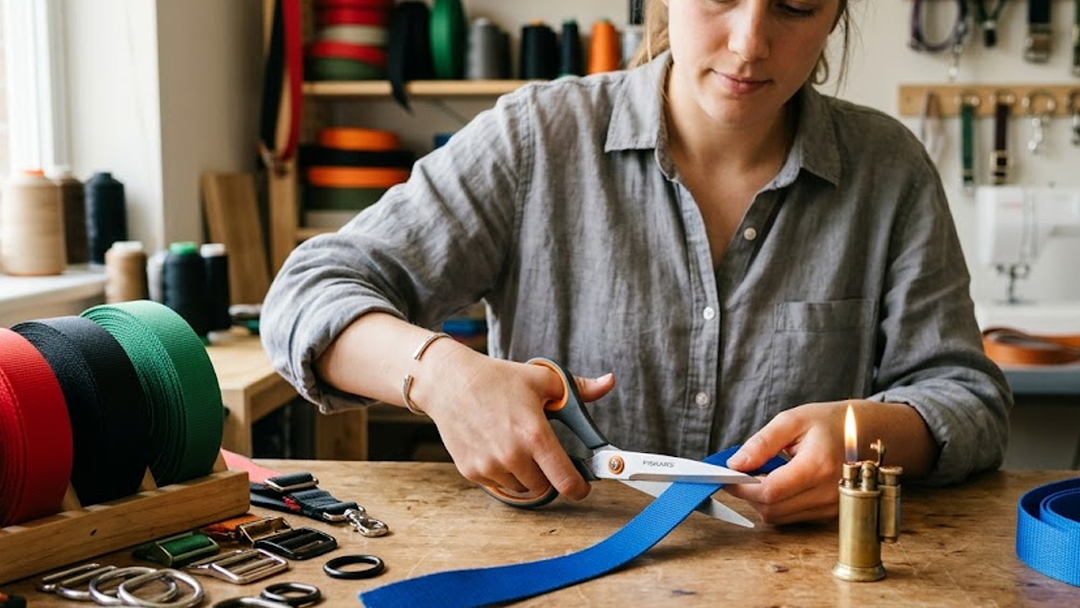
A sharp pair of scissors works fine, but a hot knife is the more elegant solution because it cuts and seals the edge in one pass. For nylon, polyester, and polypropylene webbing, sealing after cutting is non-negotiable. These thermoplastic fibers will unravel the moment you cut them if you skip this step. A brief, gentle pass with a lighter melts the fibers together and locks the edge in place. For cotton webbing, skip the flame entirely and use a liquid fray preventer instead.
Sew with the right tools.
Standard thread and a regular needle aren't going to cut it here. You need heavy-duty thread and a needle rated for your webbing material's thickness. A home sewing machine handles thinner webbing without complaint, but thicker material may require an industrial machine. Pin or clip everything carefully before you start, because webbing doesn't have much give and precision matters.
Use box stitches at connection points.
Wherever your webbing forms a loop or attaches to hardware, a box stitch or bar tack creates the strongest possible hold by spreading stress across a wider area rather than concentrating it on a single thread line.
Always test before you trust it.
For any functional or safety-related project, give every seam a real tug before calling it finished. Finding a weak point at your workbench is infinitely better than finding it when your dog spots a squirrel across the street.
Pairing Webbing with the Right Hardware
Webbing rarely does its job alone. In most projects, it works alongside buckles, D-rings, tri-glides, and snap hooks to create something fully functional. Getting the hardware match right is just as important as picking the correct webbing material in the first place.
The most basic rule is straightforward: your hardware should match the width of your webbing. A one-inch buckle paired with three-quarter-inch webbing will shift, slip, and frustrate you every single time you use it. Match the sizes precisely and everything locks together the way it's supposed to.
Material compatibility matters too. If your project will spend time outdoors or in wet conditions, plastic hardware is often the smarter call because it won't rust or corrode. Metal hardware, on the other hand, tends to carry higher load ratings and a more premium feel, which suits heavy-duty pet gear and outdoor equipment beautifully. Just avoid mixing bare metal hardware with polypropylene webbing in high-moisture situations, where the combination tends to underperform over time.
Load rating alignment is the third piece of the puzzle. There's no point in using a heavy-duty polyester webbing rated for serious weight if the plastic buckle you've chosen is rated for a fraction of that load. Your finished project is only as strong as its weakest component, and hardware is where that weakness often hides.
The World Opens Up from Here
Understanding webbing materials is one of those foundational pieces of knowledge that quietly makes you better at a surprisingly wide range of projects. Once you can look at a situation and immediately know whether it calls for UV-resistant polyester, shock-absorbing nylon, or soft cotton webbing, you stop second-guessing yourself and start building things with real confidence.
The best next step is a simple one: pick a project, choose the webbing material that fits its needs, and make something. Webbing is forgiving enough for beginners to learn on but versatile enough to keep experienced crafters genuinely engaged. The learning curve is gentle, and the results tend to be satisfying pretty quickly. So gather your tools, grab some webbing, and get started.
Frequently Asked Questions
What's the strongest type of webbing material?
Nylon and polyester webbing are your strongest mainstream options. Nylon webbing has a slight tensile strength advantage and offers helpful stretch, while polyester webbing delivers comparable strength with minimal elongation and better UV resistance. Actual strength figures vary based on width, weave density, and manufacturing quality, so always check the specifications for the specific webbing material you're buying.
Can I wash items made with webbing materials?
Yes, and it's pretty straightforward. Hand washing in cool water with mild soap is the safest method for most synthetic webbing. Avoid hot water and harsh detergents, and always air dry rather than tossing things in the dryer. High heat can damage synthetic webbing fibers even when washing doesn't. Cotton webbing can also be washed but may shrink if exposed to warm or hot water, so cool water is the safer call there too.
Why does synthetic webbing need to be sealed after cutting?
Synthetic webbing material is made from thermoplastic fibers held in place by the weave itself. Once you cut through that weave, the exposed fibers at the edge have nothing keeping them organized and will start unraveling almost immediately. Applying brief heat melts those fibers together and creates a fused edge that stays intact. It takes about three seconds and makes a significant difference in the longevity of your finished project.
How much weight can webbing typically hold?
The range is wide. One-inch nylon webbing commonly has a breaking strength somewhere between 1,000 and 1,500 pounds, while wider, heavy-duty webbing material can handle several thousand pounds. That said, breaking strength is not the number you design around. Knots, stitching, hardware connections, and normal wear all reduce effective strength, which is why safety guidelines typically recommend working at a fraction of the rated breaking strength for any load-bearing application.
Is webbing material safe for pets?
Absolutely. Nylon and polyester webbing are workhorses in the pet industry precisely because they're strong, easy to clean, and available in more colors than your dog will ever appreciate. Just make sure the webbing width and strength rating are appropriate for your pet's size and energy level, and check the hardware and stitching regularly. Webbing material holds up very well, but a determined large dog will find any weak point eventually.
Where can I buy quality webbing materials?
Seek out suppliers that carry a wide selection of webbing in multiple materials, widths, and colors, along with the hardware and accessories you'll need to complete most projects. Look for vendors who provide clear product specifications and are responsive to customer questions before you order.


