
How to Customize Colored Webbing Straps

Color is where a project stops being generic and starts being yours. A dog collar in the right shade of teal, a bag strap in a warm burnt orange, a set of luggage loops in colors your kid can spot across a baggage carousel. These details matter to the people making them. And after more than two decades of selling webbing out of Moulton, Alabama, we've learned that the makers who get the best results aren't just picking their favorite color off a chart. They're thinking through how that color will perform, age, and hold up alongside hardware, thread, and the real-world conditions the finished piece will actually face.
This is a practical guide to that whole process, from material selection through final construction. The goal is a finished piece that looks as good six months from now as it did the day you made it.
Understanding Color Durability in Different Webbing Materials
The material your webbing is made from determines how well any color holds up over time, and this is where a lot of makers get surprised after the fact.
Polypropylene
Polypropylene webbing is lightweight and budget-friendly, which makes it a popular choice. But polypropylene and UV light don't get along. Vivid mid-tones like bright red, orange, and yellow tend to be the most vulnerable. We've watched bright pink polypropylene webbing come back from a summer of patio use looking closer to salmon. If your project lives outdoors, either choose a deeper or more neutral shade, or consider switching materials.
Nylon
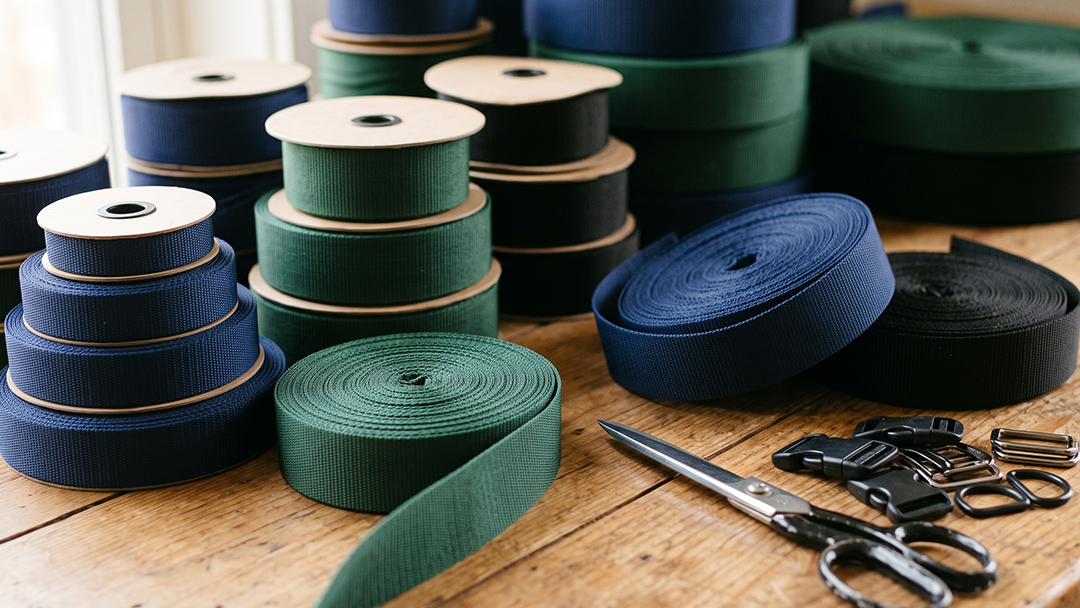
Nylon webbing is a much better performer for color longevity. The fiber structure accepts dye in a way that creates real staying power, and nylon's natural abrasion resistance means the color doesn't wear off the surface the way it can with softer materials. For dog leashes, bag handles, climbing gear, and anything that will see friction and weather, nylon is the smarter choice if color fidelity matters to you.
Polyester
Polyester sits between the two. It handles UV better than polypropylene, but it doesn't always take dye as evenly as nylon. Deeper, richer colors like navy, forest green, and black tend to be the most stable in polyester. Pastels and neons are more likely to show fading over time, particularly if the piece gets washed regularly or spends time in direct sun.
The short version: think about where the finished project will live before you commit to a color. Indoor projects give you a lot of latitude. Outdoor projects reward more careful material selection.
Combining Multiple Colors Without Compromising Strength
Mixing colors creates visual complexity, but it also creates construction decisions that affect how the finished piece holds together.
When you sew two pieces of webbing in layers, the combined thickness can challenge a standard sewing machine. A walking foot helps move the material evenly through the presser foot and prevents the layers from shifting. The thread matters just as much as the machine. Decorative thread that looks good in a stitch line won't hold up under tension. Use heavy-duty thread rated at or above the strength of your webbing.
Woven and braided color combinations are visually striking, but the weave pattern itself affects structural performance. A simple over-under weave distributes tension across the full structure. More complex patterns with long floats, meaning sections of webbing that cross over multiple strands before going under, create weak points where the piece can shift or snag under load. If the project needs to support weight, test it before putting it into actual use.
Color-blocking through end-to-end splicing is one of the cleaner options for creating distinct color transitions. The key is in the stitching at each splice point. Box stitching or bar tacks distribute load across multiple stitch lines, and the thread strength should match or exceed the webbing's breaking strength. A single line of straight stitching looks tidy, but it isn't enough if the piece will ever face real stress.
We've seen beautiful gradient projects come through, with makers splicing four or five webbing colors into a single continuous strap. The ones that lasted were the ones where the maker gave the same attention to every stitched connection that they gave to the color arrangement.
Heat-Sealing Colored Webbing Ends
Fraying is the fastest way to undermine an otherwise well-made project. Heat-sealing solves it, but the technique shifts a little depending on the color you're working with.
Lighter colors like white, cream, and pale yellow show scorch marks immediately. A flame held too long against light webbing leaves a brown or yellow edge that you can't recover from. The goal is a quick, controlled pass that fuses the fibers without discoloring them. Move through the flame rather than holding the webbing in it.
Darker colors like black and navy hide minor imperfections, but don't take that as permission to rush. Overheating creates a brittle, rough edge regardless of color, and a sharp sealed edge can snag thread or irritate skin on something like a dog collar or bag handle. A properly sealed edge should be smooth and slightly rounded.
Printed or multicolor webbing can behave unpredictably at the seal point. Some dyes react to heat differently than others, and you may find that one color in a printed pattern darkens or shifts tone when the flame gets close. Test on a scrap piece before sealing your finished work.
Webbing with metallic threads or reflective elements calls for extra care. Those materials don't always melt at the same temperature as the base webbing, which can create uneven or ragged edges. A webbing hot knife gives you more control in those situations than an open flame does.
Dyeing or Painting Webbing for Fully Custom Colors
Sometimes the color you have in mind doesn't exist on a spool. Dyeing and painting open up possibilities, but they also introduce real variables worth understanding before you commit time and materials.
Nylon takes dye well. Acid dyes, which use the same chemistry as dyes for protein fibers like wool, bond effectively with nylon when applied with heat and water. The webbing needs to stay in the dye bath long enough for even penetration. Pull it too soon and you get blotchy, inconsistent color that looks like a mistake rather than a choice.
Polypropylene and polyester are another matter. Both materials resist water-based dyes almost entirely. Disperse dyes exist for polyester, but they require high heat and specific conditions that aren't practical for most small-scale work. Polypropylene is effectively impossible to dye successfully at the home or studio level. If you need a specific color in either of those materials, pre-dyed webbing is the reliable path.
Fabric and acrylic paints can add color, pattern, or detail to webbing, but they change how the material moves. Painted webbing stiffens, and paint applied to a surface that bends repeatedly will eventually crack or peel. For decorative elements that don't carry load and won't see hard use, it can work. For anything structural, it's not the right tool.
Fabric markers are worth knowing about for small accent work. They're not as permanent as dye, but on a piece that won't be washed constantly, they hold up reasonably well and give you precision that a dye bath can't.
Adding Hardware and Finishes to Colored Webbing
Hardware selection is part of the design, not an afterthought, and getting it right makes the difference between a piece that looks intentional and one that looks assembled.
Black hardware is the most neutral option and works across almost any webbing color. Silver and nickel finishes pair naturally with cool tones like blue, green, gray, and purple. Brass and antique gold read as warm and complement red, orange, tan, and earthy shades. Rose gold has found a strong following in the past few years and works particularly well alongside blush, mauve, dusty pink, and soft neutrals.
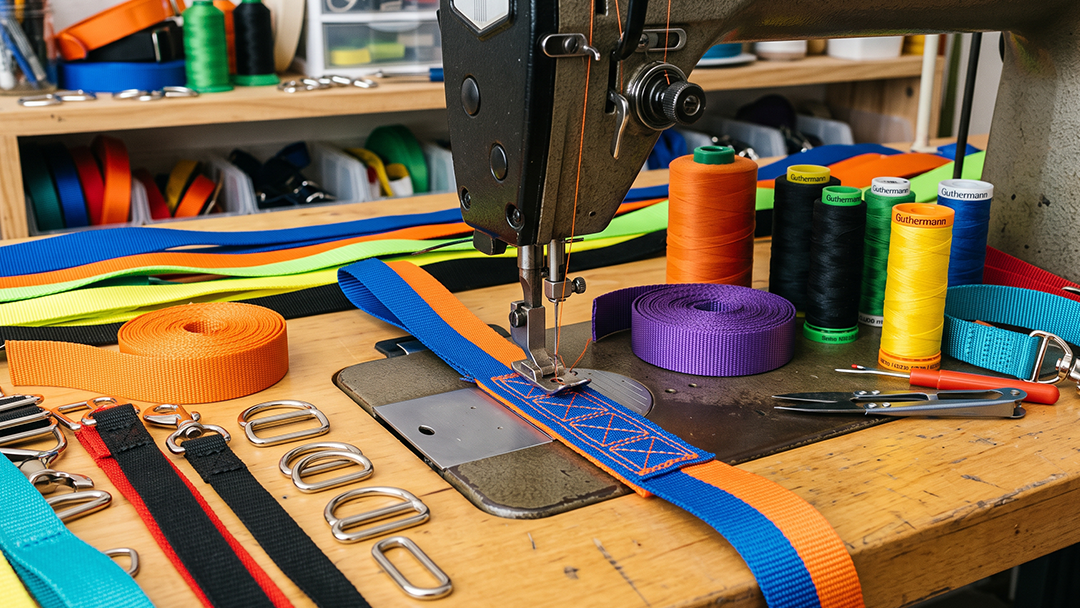
Beyond aesthetics, finish affects longevity. Powder-coated hardware resists wear and scratching better than plated finishes. If the project will see moisture, outdoor exposure, or heavy daily use, think about how the hardware will age alongside the webbing. Rust bleed on light-colored webbing is difficult to address once it starts.
At attachment points, fold the webbing back on itself and stitch through both layers. This puts double material at the stress point and keeps hardware from tearing through a single ply. For heavy-duty applications, a small reinforcement rectangle of the same webbing material under the stitching adds meaningful strength without adding much visible bulk.
One advantage of sourcing your webbing and hardware from the same place, which is how we've set things up at Country Brook, is that you can confirm compatibility before you start cutting. Color pairings, width-to-hardware fit, and finish against dye lot are all easier to work through when you're working with one supplier who carries both sides of the equation.
Slow Making and the Case for Color Intentionality
For makers who think about what goes into a project as much as what comes out of it, webbing color selection is one of those quiet decisions that shapes the whole character of the work. A hand-stitched bag strap in a considered colorway tells a different story than a functional piece put together without that kind of attention. The webbing is still doing its job either way, but one of them carries the maker's thinking in a visible way.
This is something we see in the projects that come back to us through customer conversations. A maker who is building a series of market tote bags for a local shop will spend real time on color. A fiber artist incorporating webbing into a woven piece thinks about how the synthetic material reads against natural fiber. These aren't decisions that need to be complicated, but they do benefit from being deliberate. Pick a color that will age the way you want it to, that will work with your hardware, and that will still feel right when the piece has a year of use on it.
Testing Before Committing to a Final Design
The most useful step in the customization process happens before the project is finished.
Cut test pieces and put them through whatever the finished project will actually face. A dog leash should be tested under pulling force. A bag strap should carry real weight for a few days. Outdoor gear should spend time in direct sun. This isn't overthinking. It's how you find out that the color combination you loved doesn't have enough contrast in low light, or that the webbing softens when it gets wet in a way that affects how it feeds through hardware.
Testing reveals problems while there's still room to make different decisions. A project that looks strong on the work surface doesn't always perform the same way in real conditions. The information you get from a week of controlled testing is worth more than discovering the issue after a customer or recipient has the finished piece in hand.
Frequently Asked Questions
Can I mix different widths of colored webbing in the same project?
Yes. The thing to watch is how the transition between widths is handled. Sewing narrower webbing onto wider requires careful alignment to prevent twisting at the seam. On any load-bearing section, the narrower webbing becomes the limiting factor for strength and should be reinforced or kept out of the highest-stress areas of the design.
Does the color of webbing affect its strength?
The dye itself doesn't meaningfully change tensile strength. Where problems can arise is in lower-quality manufacturing where the dyeing process involves excessive heat or chemical exposure that weakens fibers during production. Webbing from a supplier who tests finished goods after dyeing, rather than just the base material, gives you better assurance that color choice isn't costing you performance.
How do I prevent colored webbing from bleeding onto fabric?
Pre-wash the webbing before incorporating it into a project, especially with deep or vivid colors. Some dyes aren't fully fixed and will transfer when the material gets wet. Washing first removes excess dye and gives you a clear picture of whether bleeding is going to be an issue before the webbing is already sewn into something.
What's the best way to mark cutting lines on colored webbing without leaving visible marks?
Tailor's chalk brushes off cleanly on darker webbing and leaves no residue. On lighter colors, a disappearing fabric marker fades on its own within a few hours. Avoid permanent markers, as they can bleed through the webbing or remain partially visible after the cut is made.
Can I use bleach to lighten colored webbing?
No. Bleach breaks down synthetic fibers and significantly reduces webbing strength, even when it achieves the color result you were after. If you need lighter webbing, start with a lighter color. There's no safe shortcut from dark to light on synthetic material.
Troy has helped Country Brook Craft Supply support their community of makers, crafters, sewers, small businesses, and DIYers from the Moulton, Alabama shop for over 15 years.


