
Best Webbing for Outdoor Gear (Backpacks, Camping, and More)
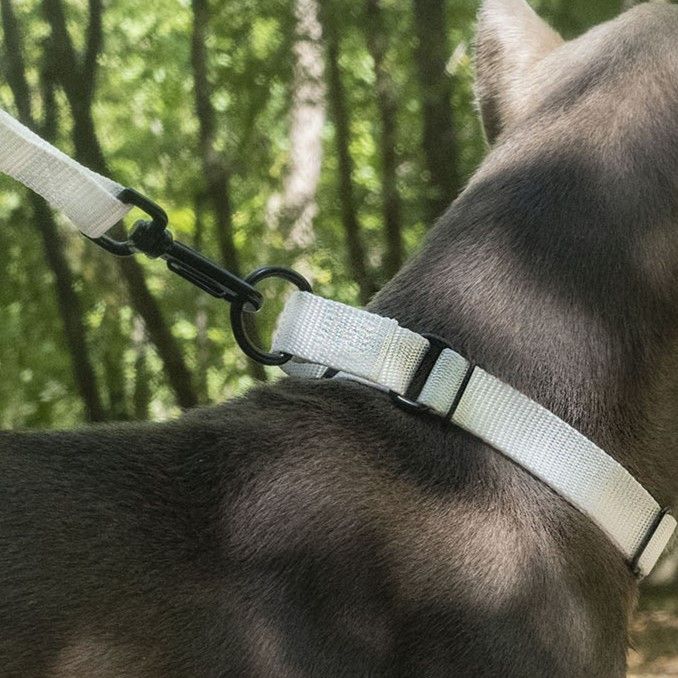
If you spend any time outdoors, you rely on webbing more than you probably realize. It is in your backpack straps, your tent tie-downs, your gear loops, your dog’s leash, and even the handles on your cooler. Webbing is one of those materials that quietly does the heavy lifting. When it fails, everything else tends to follow.
Choosing the right webbing for outdoor gear is not just about strength. It is about how that material behaves in real-world conditions. Sun exposure, moisture, abrasion, and temperature shifts all play a role in performance. A strap that works perfectly in a garage workshop may not hold up on a multi-day hike or a wet camping trip.
This guide breaks down the most common types of webbing used in outdoor gear and helps you understand where each one shines. Whether you are repairing equipment, building your own gear, or just trying to buy smarter, this will give you a clear path forward.
Why Webbing Matters in Outdoor Gear
Outdoor gear is all about reliability. When you are miles from your car or deep into a trail system, small failures can become big problems. Webbing is often the structural backbone of that gear. It distributes weight, secures loads, and provides connection points for hardware.
The challenge is that outdoor environments are unpredictable. You may deal with rain one day and intense sun the next. Your gear might be dragged across rocks, packed tightly into a bag, or left damp overnight. The right webbing handles these variables without weakening or becoming uncomfortable to use.
That is why material choice matters so much.
Nylon Webbing: Strong and Flexible
Nylon is often the first material people think of when it comes to heavy-duty webbing. It has a reputation for strength, and for good reason. Nylon webbing has a high tensile strength and can handle significant loads without breaking.
One of its biggest advantages is flexibility. Nylon has a bit of stretch to it, which can be helpful in applications where shock absorption matters. Backpack straps, climbing accessories, and load-bearing gear often benefit from this slight give.
Nylon also feels smooth in the hand, which makes it comfortable for straps that come into contact with your body.
There are a few tradeoffs to consider. Nylon absorbs water more readily than other materials. When it gets wet, it becomes heavier and can take longer to dry. Over time, repeated exposure to moisture can affect performance if the webbing is not properly cared for.
Nylon also has moderate resistance to UV exposure, but it is not the best option for long-term sun exposure without protection.
Best uses for nylon webbing in outdoor gear:
- Backpack shoulder straps and hip belts
- Load-bearing straps
- Gear loops and tie-ins
- Dog leashes and harnesses
Polyester Webbing: Durable and Weather Resistant
Polyester webbing is often the best all-around choice for outdoor environments. It offers a strong balance between durability, low stretch, and resistance to the elements.
Unlike nylon, polyester does not absorb much water. It dries quickly and maintains its strength even when wet. This makes it ideal for camping gear, marine environments, and anything that might be exposed to rain or humidity.
Polyester also holds up well under UV exposure. If your gear spends a lot of time in the sun, polyester will maintain its integrity longer than nylon.
Another advantage is its low stretch. Polyester stays stable under load, which is important when you want consistent tension. Tent guylines, tie-down straps, and structural components benefit from this stability.
Best uses for polyester webbing in outdoor gear:
- Tent straps and guylines
- Tie-down straps for gear and cargo
- Outdoor furniture repair
- Marine and water-adjacent applications
Polypropylene Webbing: Lightweight and Water Resistant
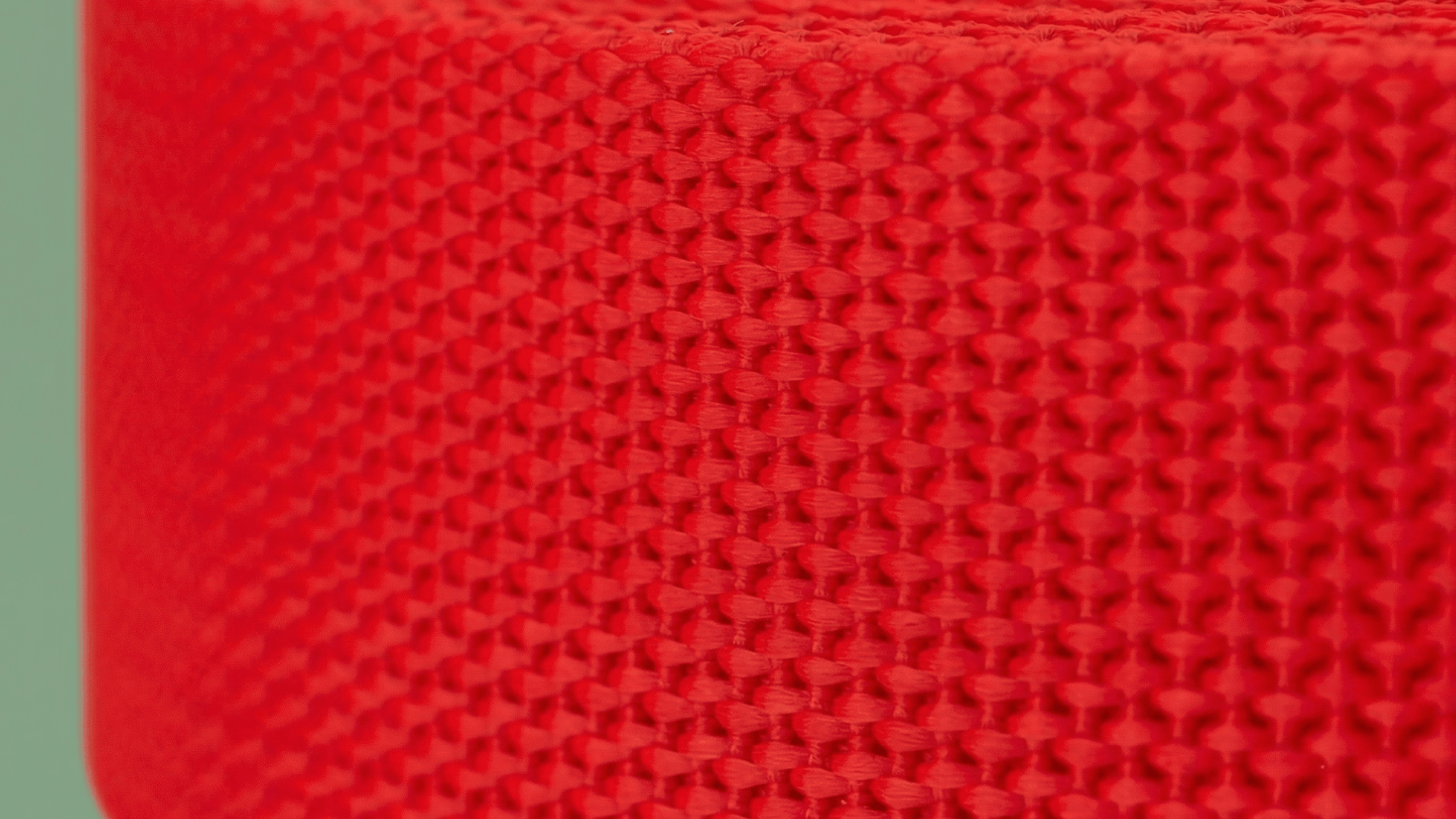
Polypropylene webbing is a great option when weight and moisture resistance are your top priorities. It is lighter than both nylon and polyester, and it does not absorb water. In fact, it can float, which makes it useful in certain outdoor and water-based applications.
This material is often more affordable as well, which makes it appealing for budget-conscious projects or high-volume use.
The tradeoff is strength. Polypropylene is not as strong as nylon or polyester, and it has lower resistance to abrasion. It can also degrade more quickly under prolonged UV exposure.
That said, it still has a place in outdoor gear when used appropriately.
Best uses for polypropylene webbing in outdoor gear:
- Lightweight camping gear
- Non-load-bearing straps
- Temporary tie-downs
- Water-related applications where flotation is helpful
Choosing the Right Width and Thickness
Material is only part of the equation. The width and thickness of your webbing play a major role in performance.
Wider webbing distributes weight more evenly, which makes it more comfortable for straps that rest on your shoulders or hips. This is why backpack straps are often 1.5 to 2 inches wide.
Narrower webbing is better suited for accessory loops, compression straps, and areas where bulk needs to be minimized.
Thickness also matters. Thicker webbing tends to be stronger and more durable, but it can be harder to sew and less flexible. Thinner webbing is easier to work with but may not hold up under heavy loads.
When in doubt, match the width and thickness to the demands of the application rather than choosing based on convenience.
Abrasion Resistance and Real-World Wear
Outdoor gear rarely stays pristine. Webbing rubs against rocks, slides through buckles, and gets packed and unpacked repeatedly. Abrasion resistance is one of the most important factors to consider.
Nylon generally performs very well in abrasion-heavy environments. It can handle repeated friction without fraying quickly.
Polyester also holds up well, though it may feel slightly stiffer depending on the weave.
Polypropylene is more prone to wear over time, especially in rugged conditions.
If your gear will see heavy use, it is worth investing in higher-quality webbing with a tight weave and proven durability.
UV Exposure and Long-Term Performance
Sunlight can quietly degrade materials over time. If your gear is frequently exposed to direct sunlight, UV resistance becomes critical.
Polyester stands out here as the most UV-resistant of the three common materials. It maintains strength and color better over extended exposure.
Nylon can handle some UV exposure but may weaken over time if constantly left in the sun.
Polypropylene tends to be the most vulnerable to UV degradation unless it is treated or stabilized.
For outdoor gear that lives outside or is used in sunny climates, polyester is often the safest choice.
Comfort and Handling
Not all webbing feels the same in your hands. Some materials are smoother, while others are more rigid.
Nylon is typically the most comfortable against the skin. It has a softer feel and works well for straps that come into direct contact with your body.
Polyester can feel slightly stiffer, but modern weaves have improved comfort significantly.
Polypropylene often feels the most rigid, which is fine for certain uses but less ideal for wearable gear.
If comfort matters, especially for long hikes or extended wear, nylon or a softer polyester option is usually the better route.
Matching Webbing to Your Project
The best webbing for outdoor gear depends on what you are building or repairing.
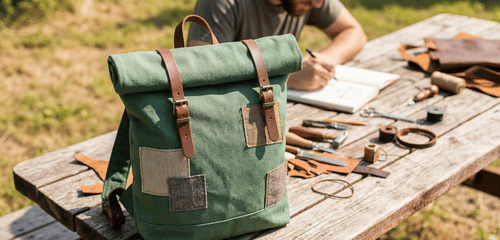
If you are making a backpack, nylon is a strong choice for straps because of its flexibility and comfort. Polyester can be used for structural components that need to stay stable.
If you are setting up a campsite, polyester is a reliable option for straps and tie-downs because it handles moisture and UV exposure well.
If you are working on lightweight or water-based gear, polypropylene can be a practical and cost-effective solution.
The key is to think about how the gear will actually be used. Consider the environment, the load, and how often the webbing will be handled.
Final Thoughts
Webbing may not be the most exciting part of outdoor gear, but it is one of the most important. The right choice can improve comfort, increase durability, and give you confidence that your gear will perform when it matters.
Nylon offers strength and flexibility. Polyester provides durability and resistance to the elements. Polypropylene brings lightweight performance and water resistance.
Each has its place. The goal is to match the material to the demands of your adventure.
FAQ
What is the strongest webbing for outdoor gear?
Nylon is generally considered the strongest common webbing material. It has high tensile strength and performs well under heavy loads, which makes it ideal for load-bearing applications.
Which webbing is best for wet conditions?
Polyester and polypropylene are both excellent in wet environments. Polyester maintains its strength when wet, while polypropylene does not absorb water at all.
Does webbing weaken in the sun?
Yes, prolonged UV exposure can degrade webbing over time. Polyester has the best UV resistance, while nylon and polypropylene may weaken faster if left in direct sunlight for extended periods.
What width of webbing should I use for backpack straps?
Most backpack straps use webbing between 1.5 and 2 inches wide. This width helps distribute weight evenly and improves comfort during extended use.
Is polypropylene webbing strong enough for outdoor gear?
It can be, depending on the application. Polypropylene is suitable for lightweight and non-load-bearing uses, but it is not as strong or abrasion-resistant as nylon or polyester.
How do I choose between nylon and polyester webbing?
Choose nylon if you need strength and flexibility. Choose polyester if you need resistance to water, UV exposure, and stretching.
Can I use the same webbing for all my outdoor gear?
It is possible, but not always ideal. Different parts of your gear may benefit from different materials. Matching the webbing to each specific use will give you better performance overall.
How long does webbing last outdoors?
It depends on the material and conditions. High-quality polyester webbing can last for years with proper care, while lower-grade materials may wear out more quickly in harsh environments.


