
Purse Strap Replacement: How to Fix or Upgrade Your Bag
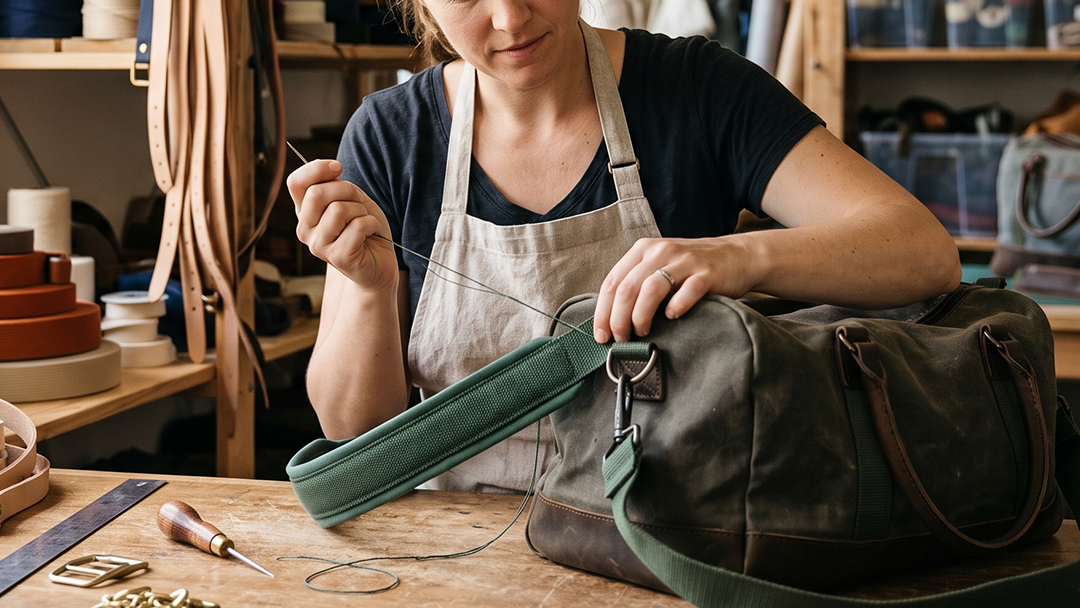
A broken purse strap can feel like the end of a favorite bag. The leather tears, the hardware snaps, or the webbing frays just enough to make carrying it feel risky. But a damaged strap does not mean the bag is done.
Replacing a purse strap is one of the most practical repair skills to learn. It extends the life of bags you already own, saves money, and in many cases gives you the chance to make something better than what came with the bag originally. If the strap that failed was a flimsy afterthought from a fast-fashion brand, replacing it with quality webbing and solid hardware is a genuine upgrade and not just a repair.
The process is more approachable than most people expect. You do not need advanced sewing skills or specialized equipment for most replacements. What you need is the right materials, a clear plan, and an understanding of how straps are attached.
Why Purse Straps Fail
Understanding why straps fail helps you choose better replacements and avoid the same problem twice.
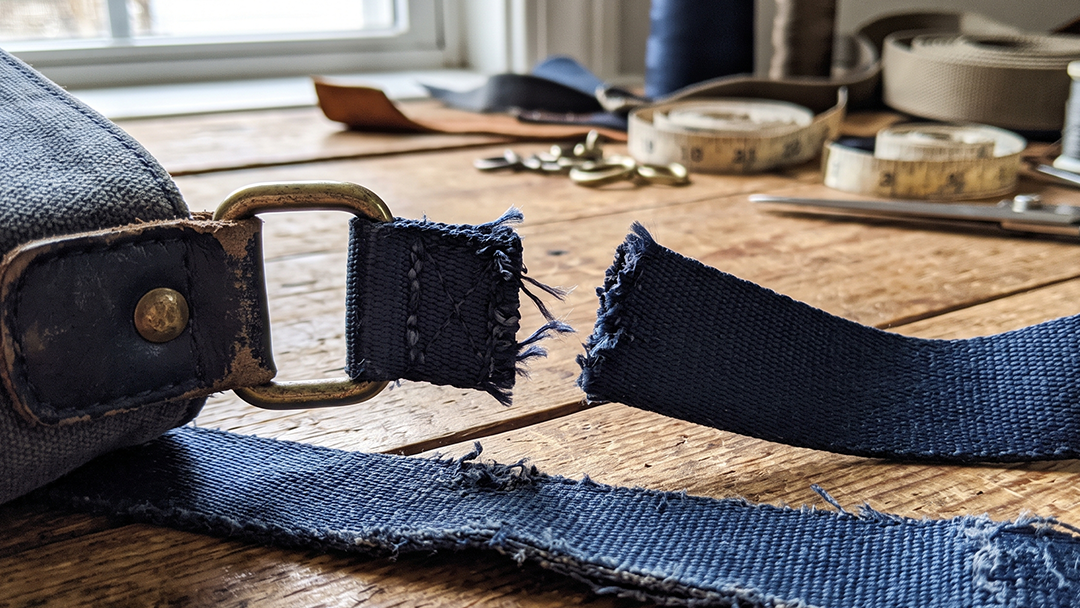
Most purse straps fail at predictable points. Attachment hardware is a common weak spot. Cheap lobster clasps, thin D-rings, or poorly secured rivets can give out under regular use. The strap material itself may also be the problem. Thin leather cracks with age and exposure. Low-quality synthetic straps become brittle or develop surface wear that weakens the fibers underneath.
Stitching failure is another frequent issue. Thread degrades over time, especially when exposed to moisture, sunlight, or repeated friction. Even well-made bags can develop stitch failure if the thread was not matched correctly to the strap material or if the bag has seen years of heavy use.
Sometimes the strap was never quite right to begin with. A strap that is too narrow for the weight of the bag will show accelerated wear. A strap that is too short forces awkward carrying positions that stress both the strap and the attachment points. Bags that prioritize fashion over function often need replacement not because they broke, but because they were never designed for real use.
Recognizing these patterns means you can make smarter choices when selecting replacement materials. A strap that failed due to thin material should be replaced with something more substantial. A strap that pulled away from weak hardware needs better attachment points or reinforced stitching, not just a new strap threaded through the same tired rings.
Assessing Your Bag Before Replacing the Strap
Before buying materials or planning your approach, take a close look at the bag itself.
Check the attachment points first. If the original strap tore away from the bag, inspect the fabric or leather where it was connected. Is the material still intact, or has it torn or stretched? If the bag body is damaged, reinforce the area before attaching a new strap. Adding an extra layer of fabric or leather on the inside distributes stress more evenly and prevents the same failure from happening again.
Examine the hardware. Are the D-rings, O-rings, or rectangle rings still in good shape? If they are bent, corroded, or loose, replace them along with the strap. Hardware is inexpensive, easy to swap out, and new hardware paired with a new strap makes for a much more reliable result overall.
Consider how you actually use the bag. If you carry it crossbody but the original strap was designed for shoulder carry, this is your opportunity to adjust the length. If the bag gets heavy and the original strap dug into your shoulder, a wider strap will make a real difference in comfort.
Think about whether the strap needs to be removable. Some bags benefit from adjustable, detachable straps that can be swapped depending on the situation. Others are better served by a permanently attached strap that eliminates hardware as a potential failure point entirely.
Choosing Replacement Strap Materials
The material you choose determines how the strap performs, how long it lasts, and how it feels in daily use.
Nylon webbing
Nylon webbing is one of the most versatile and durable options for purse straps. It handles weight well, resists abrasion, and holds up to moisture and UV exposure better than most alternatives. Webbing comes in different widths and thicknesses, so you can match the strap to the size and weight of the bag. A lightweight crossbody works fine with 3/4-inch or 1-inch webbing, while a heavier tote or messenger bag benefits from 1.5-inch or wider webbing that spreads weight across the shoulder.
Polypropylene & Cotton webbing
Polypropylene webbing is a more budget-friendly option that works for lighter bags, though it does not have the same longevity as nylon. Cotton webbing has a softer hand and a more natural look, and it is a genuinely good choice for makers who want a bag that looks and feels less synthetic. It is less resistant to moisture and will show wear faster than nylon, but for a handmade bag you are not carrying through rainstorms, the tradeoff is often worth it.
Leather
Leather is a classic choice that ages visibly and develops character over time. Full-grain leather straps are durable and strong, but they require more upkeep and can be less comfortable on heavier bags unless they are wide enough to avoid digging in. Leather also stretches slightly with use, which is worth factoring in if the strap needs to maintain a specific length.
For bags used daily or in varied conditions, nylon webbing often makes the most practical sense. It performs consistently, requires no maintenance, and gives you a wide range of color and width options. After more than two decades of working with webbing at our Moulton shop, the clearest truth we can offer is this: the quality of the weave and the fiber density matters more than anything on the label. Tightly woven, heavy webbing lasts. Thin, loosely woven webbing does not, and you will feel the difference the first time you load up a bag and head out for the day.
How to Attach a Replacement Strap
The attachment method depends on the bag's design and your comfort level with different techniques.
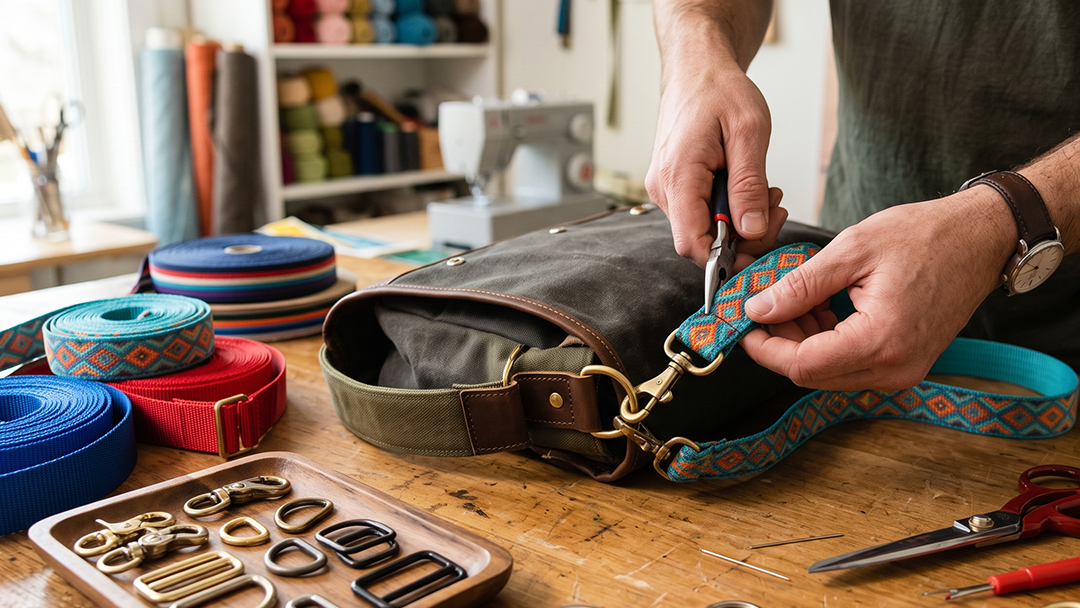
If the bag has existing D-rings, O-rings, or loops, the simplest approach is to attach the strap using swivel clasps or trigger snaps. This makes the strap removable and adjustable without any sewing. Thread the webbing through an adjustable slide, attach hardware to each end, and clip it onto the bag. This works especially well for bags where you want the flexibility to swap straps or change the length depending on what you are wearing.
For a more permanent attachment, sewing the strap directly to the bag provides a cleaner result and removes hardware as a potential weak point. If the bag originally had a sewn strap, you can often follow the same stitch lines. Use a heavy-duty needle and strong thread, make several passes, and reinforce the attachment point with a box stitch or bar tack. This spreads load stress over a larger area rather than concentrating it at a single point.
If the bag has fabric or leather loops where the original strap was threaded through, slide the new strap through the same loops and secure the ends with stitching or by folding the webbing back on itself and sewing it down. Adding a slider or triglide in the middle of the strap gives you length adjustability without needing to modify the bag itself.
When working with nylon or polypropylene webbing, always seal the cut ends. A quick pass over a flame melts the fibers and creates a clean, stable edge. Hold the flame close but do not linger, or the webbing will curl, blacken, and lose its integrity at exactly the point where you need it to hold.
Upgrading Beyond a Simple Replacement
Replacing a strap is also a real opportunity to improve how the bag functions, and for makers who enjoy the process of working with their hands and their materials, this is often the most satisfying part.
Adding padding to a strap makes a meaningful difference when the bag carries any real weight. Sewing a layer of foam or neoprene between two pieces of webbing, or slipping a padded sleeve over an existing strap, distributes load more comfortably and reduces shoulder fatigue on longer carries.
Changing the strap width is another effective upgrade. A wider strap feels more stable, is less likely to slide off the shoulder, and simply handles weight better. If the original strap was narrow and uncomfortable, switching to a wider option can transform the experience of carrying the bag.
Adjustable hardware gives you flexibility that a fixed strap cannot. A slider lets you change the length without re-sewing, which is especially useful for bags you carry in different ways depending on the day.
Color and finish matter more than people sometimes give them credit for. Replacing a worn strap with fresh webbing in a color that complements or contrasts with the bag changes the entire look. A neutral bag with a bright strap reads completely differently than the same bag with black or navy webbing. The function stays the same, and the bag becomes something new.
For makers who think about their materials and their process intentionally, a strap replacement is worth doing right. The bags we carry every day are part of how we move through the world, and there is something genuinely satisfying about repairing a favorite piece rather than replacing it, especially when the replacement materials are better than what was there before.
Frequently Asked Questions
Can I replace a purse strap without sewing?
Yes. If your bag has D-rings, O-rings, or loops, you can attach a replacement strap using swivel clasps, trigger snaps, or lobster clasps. These hardware options let you clip the strap on and off without any stitching, and they work well for bags where you want the option to remove or swap straps depending on the situation.
What width should a replacement purse strap be?
For most small to medium crossbody bags and purses, 3/4-inch to 1-inch webbing works well. For larger bags or anything you carry with a heavier load, 1.5-inch or wider webbing is more comfortable and does a better job distributing weight. Match the width to both the weight of the bag and the size of the existing hardware so everything works together properly.
How do I prevent a replacement strap from fraying?
For nylon or polypropylene webbing, seal the cut ends by carefully passing them over a flame. This melts the fibers and prevents fraying at the edge. For cotton webbing, a small amount of fabric glue or a tight zigzag stitch along the edge will do the same job.
Can I make a purse strap longer?
Yes. If the existing strap is too short, you can add length by sewing in an additional section of webbing or by replacing the entire strap with a longer piece. Adding a slider and appropriate hardware gives you adjustability without permanently altering the strap length.
What is the most durable material for a purse strap?
Nylon webbing is one of the most durable and reliable materials available for purse straps. It resists abrasion, holds up well to moisture and UV exposure, and handles significant weight without degrading. The density of the weave matters as much as the fiber itself, so look for tightly woven, heavy-duty webbing for bags you use regularly. We stock it in a wide range of widths and colors from our Moulton shop, and it is consistently what our customers come back for when they want a repair that actually holds.
Troy has helped CBC support their community of makers, crafters, sewers, small businesses, and DIYers from the Moulton, Alabama shop for over 15 years.


