
What Makes a Strong and Safe Dog Collar?

The collar you choose for your dog isn't just about style or how it looks clipped to a leash at the park. It's a piece of safety equipment that takes constant stress, weather exposure, and unpredictable forces. A collar that fails at the wrong moment can turn a routine walk into a dangerous situation.
Understanding what actually makes a collar strong and reliable matters more than most people realize. The difference almost always comes down to materials, construction methods, and hardware quality rather than marketing claims or how something looks hanging on a display hook.
Understanding Webbing: The Foundation of Collar Strength
The webbing is the backbone of any collar. It determines how much force a collar can withstand before failing, how it responds to moisture and UV exposure, and how long it holds its integrity over years of real use.
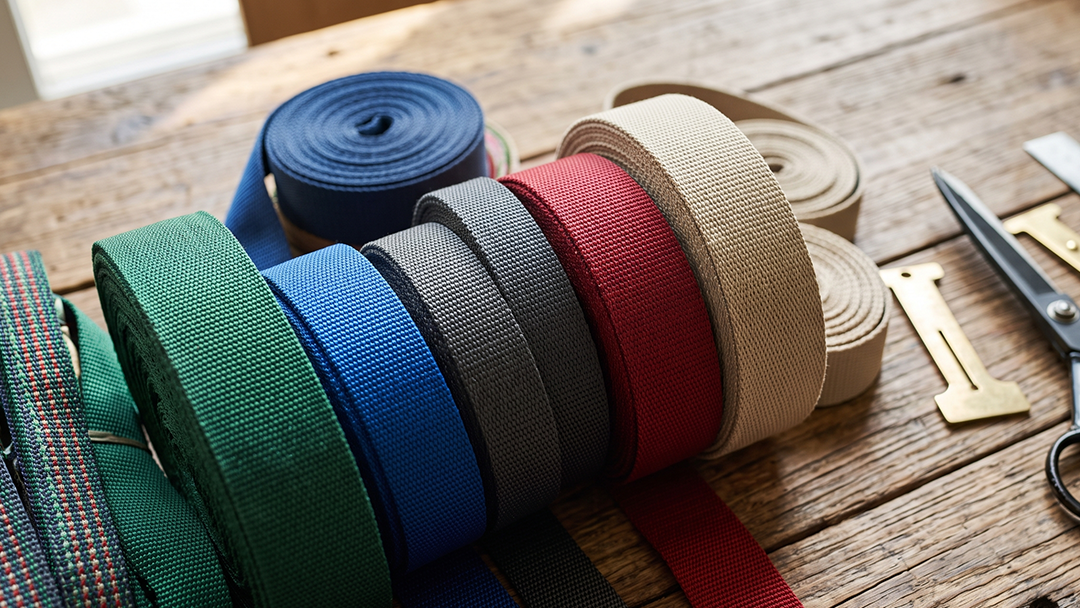
Nylon webbing is the most common choice for dog collars, but not all nylon behaves the same way. The strength of nylon webbing depends on its construction method, fiber quality, and weight per yard. Woven nylon distributes force more evenly than cheaper braided alternatives and resists fraying when cut or abraded. After more than two decades of sourcing and supplying webbing from Moulton, Alabama, that distinction is something we see play out repeatedly. The weave matters. The fiber quality matters. The weight per yard matters. A collar that looks nearly identical to another one on the outside can perform in completely different ways once real stress enters the picture.
When evaluating webbing strength, look at the break strength rating. For a medium-sized dog, webbing with a break strength of at least 500 to 800 pounds provides a reasonable safety margin. Larger or more powerful dogs need proportionally stronger materials. The webbing should be able to withstand many times the force a dog could reasonably generate during pulling, lunging, or a sudden reactive moment.
Webbing thickness adds another layer of protection beyond raw strength. Wider webbing, say 1.5 inches versus 1 inch, distributes pressure across a larger surface area, which reduces the risk of injury if your dog pulls hard. This is especially important for dogs still learning loose-leash walking or those with strong prey drives.
UV resistance is an often-overlooked factor that becomes critical for dogs spending significant time outdoors. Unprotected nylon degrades with sunlight exposure, losing up to 50 percent of its strength over time. Quality webbing includes UV inhibitors that slow that degradation considerably and extend the collar's safe working life by years, not just months.
Hardware That Holds: Buckles, D-Rings, and Attachment Points
The strongest webbing available won't help if the hardware gives out first. Buckles, D-rings, and adjustment points are where most collar failures actually occur, usually because the hardware wasn't designed or sourced with real-world forces in mind.
Side-release buckles offer convenience but vary dramatically in quality. Plastic buckles work well for small to medium dogs in low-stress situations. For larger dogs or training scenarios involving corrections or sudden stops, metal buckles provide more reliable, consistent strength. The key consideration isn't only whether a buckle will break under load, but whether it could release accidentally if your dog rolls, rubs against a fence post, or catches on something during play.
D-rings serve as the leash attachment point and absorb the most concentrated force in the whole system. Welded metal D-rings distribute stress more effectively than split rings or cast hardware. The weld point is the weakest spot in any D-ring, so look for smooth, complete welds without gaps or rough edges. Stainless steel and solid brass offer the best corrosion resistance for dogs that swim or live in humid climates.
The way hardware attaches to the webbing matters just as much as the hardware itself. Box stitching, the square pattern with an X stitched through the center, creates multiple redundant failure points. The attachment won't let go unless several threads break simultaneously. Bar tacks, tight zigzag stitching concentrated at stress points, serve a similar purpose. Collars where hardware is simply looped through the webbing and held with a single straight stitch are a problem waiting to happen.
Construction Methods That Last
How a collar is assembled determines whether it holds up to years of use or starts breaking down within months. The stitching pattern, thread quality, and number of reinforcement points separate reliable collars from ones that only look sturdy.
Thread choice affects durability more than most people expect. Heavy-duty nylon or polyester thread resists UV damage and moisture far better than cotton or inexpensive synthetic alternatives. The thread should be thick enough to fill stitch holes completely, which prevents moisture from working its way into the webbing and weakening it from the inside out.
Multiple rows of stitching provide redundancy where you need it most. If one row begins to fail from abrasion or UV exposure, additional rows continue holding the collar together. This is especially important at stress points like the D-ring attachment and buckle connections. These are the two places that experience the most repetitive loading over a collar's life.
Edge finishing prevents fraying and extends collar life considerably. Heat-sealed or turned edges keep the webbing from unraveling if it catches on branches, fence posts, or during rough play. Raw-cut edges will fray over time, gradually reducing the effective width and structural integrity of the webbing in ways that aren't always visible until something goes wrong.
The collars we carry are built with heavyweight nylon webbing and reinforced box stitching at all stress points. That approach costs more in materials and production time, but it's the standard we hold because we've seen what happens when collars are built to a price point rather than a performance standard.
Sizing and Fit: Strength Means Nothing If the Collar Slips Off
A collar can be exceptionally well built and still fail at its primary job if it doesn't fit correctly. Proper fit keeps the collar in place while allowing enough comfort for extended wear.
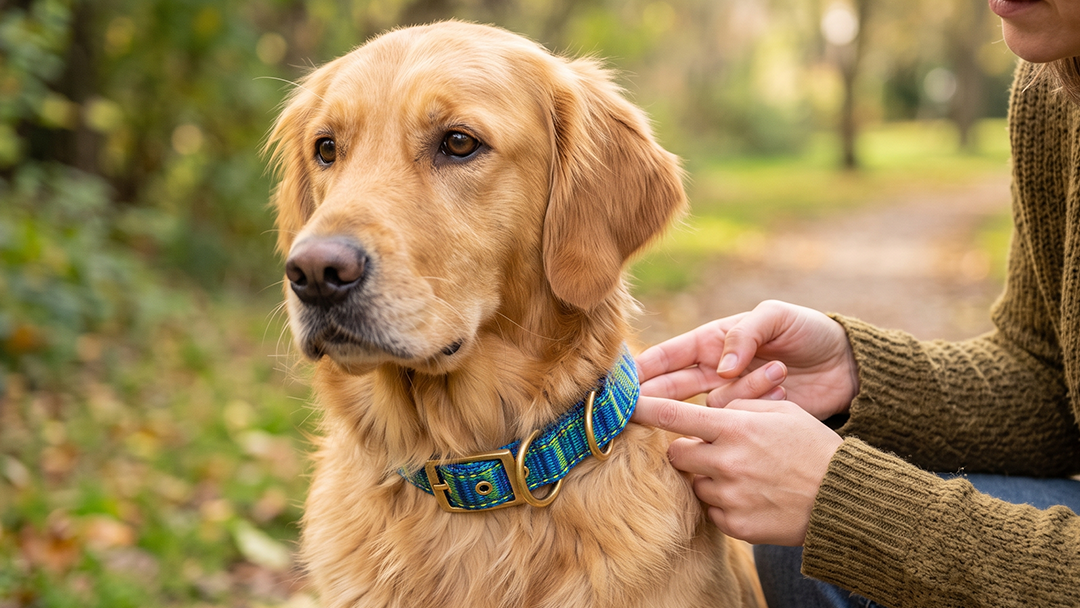
The two-finger rule is a reliable starting point: you should be able to slide two fingers comfortably between the collar and your dog's neck. Tighter than that risks discomfort and restricted breathing. Looser risks the collar slipping over the head, particularly in sighthounds or dogs with narrow heads relative to their neck circumference.
Collar width matters alongside length and fit. Wider collars distribute pressure more evenly but can be uncomfortable on small dogs with short necks. As a general guide, small dogs under 25 pounds typically do well with 5/8 to 1-inch webbing, medium dogs between 25 and 60 pounds with 1-inch webbing, and large dogs over 60 pounds with 1 to 1.5-inch webbing.
Adjustability matters for growing puppies and dogs whose weight shifts seasonally. Enough adjustment range lets you maintain proper fit without buying new equipment every few months. Too much adjustment creates extra tail length that can catch on objects or become a chew target, which introduces its own set of problems.
When to Replace: Recognizing the End of Safe Use
Even well-built collars have a lifespan. Knowing when to retire a collar is how you prevent failures before they happen rather than after.
Check the webbing regularly for fraying edges, thinning sections, or discoloration that points to UV or moisture damage. If the webbing feels stiff or brittle instead of flexible and smooth, the material has degraded and lost meaningful strength regardless of how it looks.
Examine stitching at stress points. Loose threads, broken stitches, or gaps in the stitching pattern mean the collar is approaching failure. Don't wait for the stitching to come apart completely before making a decision.
Hardware should move smoothly without sticking or rough spots. Corrosion, cracks in plastic buckles, or deformation in metal D-rings are all signs it's time for a replacement. If a buckle has released accidentally even once, retire that collar immediately without exception.
Collars used daily in outdoor environments should be inspected monthly and replaced every one to two years depending on wear. Collars used occasionally or primarily indoors may last longer, but regular inspection remains important regardless.
A Note for the Makers Who Build Their Own
There's a growing community of crafters, fiber artists, and small-batch makers who sew their own dog collars, either as a creative practice, a small business, or both. If that's you, the construction details above aren't just useful for evaluating what to buy. They're the foundation of what you're building.
Sourcing the right webbing, hardware, and thread from the start changes what your finished collars are capable of. We carry the same materials used in professional collar production, and we've worked with home sewers and small-batch makers long enough to know that the questions they ask are usually the right ones. If you're building something you'd trust on your own dog, the material choices matter from the very first stitch.
Frequently Asked Questions
How much weight should a dog collar be able to hold?
A dog collar should have a break strength significantly higher than your dog's actual pulling force. For most medium to large dogs, look for webbing rated to at least 500 to 800 pounds. Larger or more powerful breeds benefit from webbing rated to 1000 pounds or above. The collar should never be the weakest point in your leash system.
Are metal buckles always better than plastic buckles for dog collars?
Not always. High-quality plastic side-release buckles work well for small to medium dogs in everyday situations and offer real convenience. Metal buckles provide more reliable strength for large dogs, strong pullers, or training applications. The quality of the buckle matters more than the material, but metal offers a higher safety ceiling when the situation demands it.
How tight should a dog collar fit?
You should be able to comfortably slide two fingers between the collar and your dog's neck. Tighter than that can cause discomfort or restrict breathing. Looser risks the collar slipping off, especially in breeds with narrow heads or thick necks. The collar should sit high on the neck just below the jaw rather than riding down toward the shoulders.
What type of webbing material lasts longest for dog collars?
Nylon webbing with UV inhibitors offers the best combination of strength, weather resistance, and durability for most applications. Quality matters more than material type. Look for woven rather than braided construction and heavyweight webbing appropriate for your dog's size. Regular cleaning and avoiding constant moisture exposure extends the life of any webbing material.
How often should I replace my dog's collar?
Inspect your dog's collar monthly for signs of wear including fraying webbing, damaged stitching, or corroded hardware. Collars used daily in outdoor environments typically need replacement every one to two years. Replace immediately if you notice significant wear at stress points, if a buckle has failed or released accidentally, or if the webbing shows UV damage through stiffness, brittleness, or significant fading. When in doubt, replace it.
Troy has helped Country Brook Craft Supply serve their community of makers, crafters, sewers, small businesses, and DIYers from the Moulton, Alabama shop for over 15 years.


