
What Are Triglides? How They Work and When to Use Them
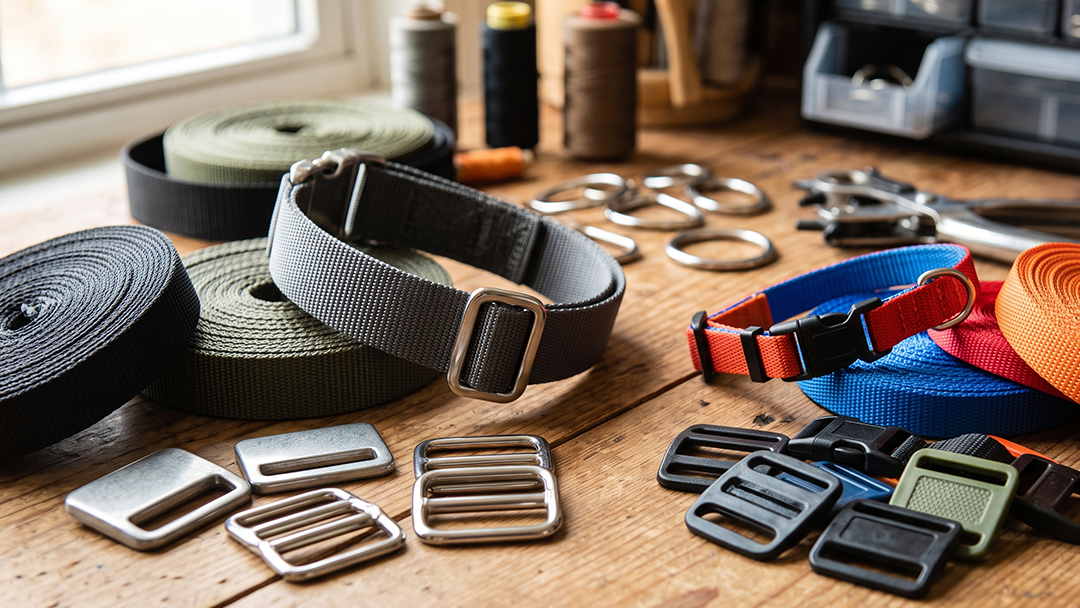
A customer came into the Moulton shop not long ago with a bag strap she'd made herself. She'd used good webbing and clean stitching, but the adjustment kept slipping every time she loaded the bag down. She'd threaded her triglide backward. One small fix, and the thing held solid. That's the kind of detail that separates a finished project from a functional one, and it's exactly why triglides are worth understanding before you start sewing.
Triglides are three-slot adjustment pieces, made from either metal or plastic depending on your application, that create an adjustable loop in webbing or strapping. They show up in backpacks, dog collars, camera straps, tool belts, and luggage compression straps. They're simple hardware, but simple doesn't mean foolproof. Threading direction matters. Material matters. Width matching matters. Get those things right and a triglide will outlast the project around it.
How Triglides Actually Work
The frame has three parallel slots divided by two center bars. Webbing feeds up through the first slot, over the first center bar, down through the middle slot, under the second center bar, and back up through the third. That path creates friction, and friction is the whole mechanism. When tension pulls on the fixed end, the webbing presses against those center bars and holds. When you want to change the length, you release tension and slide the hardware along.
The threading direction is what most people get wrong. The loose end of the webbing needs to emerge on the same side as the load. That positioning is what generates the friction lock. Thread it the other way and you've got a strap that adjusts freely whether you want it to or not.
There are no springs, no teeth, no moving parts. The triglide holds because of the geometry of that path and the friction between webbing and hardware. That simplicity is its strength, and also its limitation, which is worth knowing before you spec it into a project.
Common Uses for Triglides
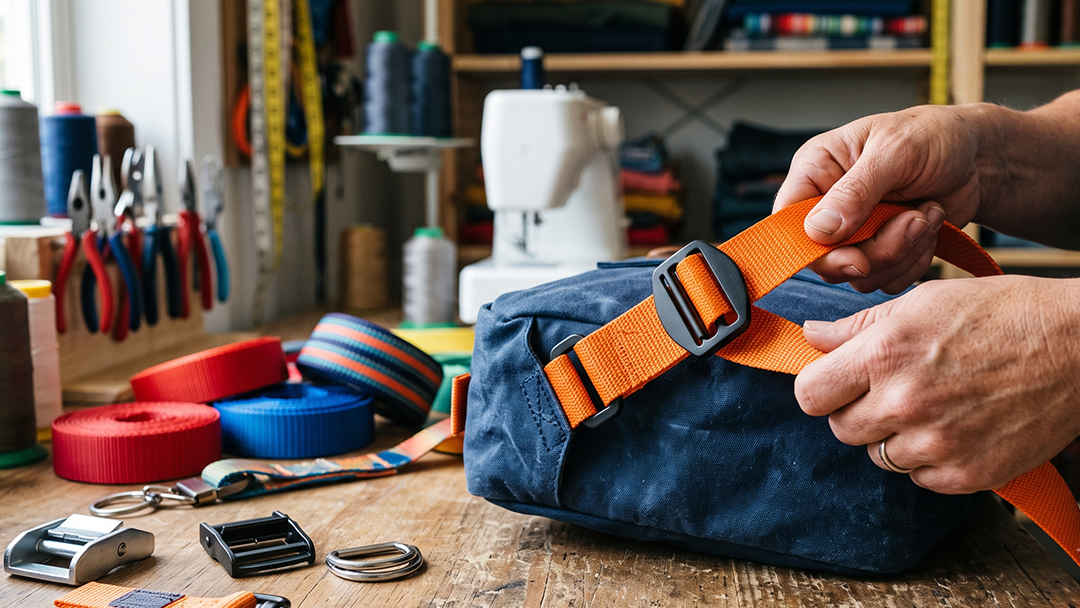
Triglides work best where you need to set a length and leave it, or make occasional adjustments rather than constant ones. Adjustable bag straps are the obvious application. We see them used on custom pet collars and leads, photography gear, handmade aprons, luggage straps, and compression systems on soft-sided bags.
One of the things our team at Country Brook hears from bag makers and small leather goods shops is that they choose triglides specifically for the low profile. A side-release buckle does a different job. It disconnects. A triglide just adjusts. For projects where a clean, minimal hardware look matters, or where the silhouette of the strap needs to stay flat against the body, triglides are often the right call.
For makers working in the slow craft tradition, such as those creating hand-stitched bags, heirloom pet gear, and custom tool rolls, triglides also have an aesthetic honesty to them. They don't pretend to be more complicated than they are. You can see exactly how they work, which tends to matter to the people who care about how their objects are built.
Material Considerations: Metal vs. Plastic
Steel and zinc alloy triglides carry more load, hold up under heavy webbing, and resist deformation over time. The edges on metal hardware tend to be sharper, which adds friction and reduces the chance of slippage. For work belts, cargo applications, or anything where hardware failure has real consequences, metal is the right material.
Plastic triglides, with acetal and nylon being the most common, are lighter, less expensive, and won't corrode. The tradeoff is a smoother surface that makes adjustment easier but reduces grip under high tension. For everyday bags, lightweight pet products, or projects where ounces matter, plastic performs well within its range.
We stock both at Country Brook in multiple sizes because one size and one material genuinely don't cover the range of what makers are building. A triglide on a small-breed collar doesn't need to be the same piece as the one on a padded camera strap for professional field use.
Width matching is not optional. A triglide sized for one-inch webbing on three-quarter-inch material will slip. One that's too narrow won't seat the webbing correctly and can cause edge damage over time. The width of the hardware should match the width of the webbing exactly.
When Triglides Are the Wrong Choice
If the strap needs to be adjusted frequently throughout the day, such as a sling bag worn while working or a positioning strap on a piece of equipment, a ladder lock or cam buckle will serve the user better. The threading path on a triglide slows down adjustment by design. That's fine for set-and-forget applications. It's frustrating for anything that needs to move quickly.
Triglides also aren't appropriate for life-safety applications unless the hardware carries a specific load rating for that use. The holding power is friction-based, and friction has limits. Any project where slippage means injury needs mechanically locking hardware with documented ratings.
Very slippery webbing, including some polypropylene and coated materials, may not generate enough friction to hold reliably regardless of how correctly you've threaded the hardware. Elastic or stretch webbing presents a similar problem: the constant tension and release tends to walk the webbing through the slots over time. In those cases, hardware with teeth or a mechanical lock is the better solution.
Tips for Working with Triglides
- Test the threading before you finish anything. Run webbing through, apply the kind of tension the project will actually see, and confirm it holds. This catches mistakes before they're sewn into a finished bag or collar.
- Seal the cut end of synthetic webbing before threading. A clean, heat-sealed end moves through the slots smoothly and sits evenly against the center bars. A frayed end creates uneven friction and makes threading harder than it needs to be.
- Leave a tail on the loose end, at least three to four inches past the hardware. Under load, a short tail can pull back through the slots. Finish that tail with a bar tack, fold and stitch it back on itself, or leave it free depending on how the design works. What you don't want is an end that can slip out entirely.
- The fixed end of the webbing, which is the connection point that carries the full load, should be secured with a bar tack or box stitch. A straight stitch alone isn't enough for anything that's going to see regular stress. That connection point is where the whole system is anchored, and it needs to hold like it.
- When positioning the hardware on the finished strap, orient the loose tail away from areas where it might snag in use. On a shoulder bag, that means pointing the tail toward the back side of the strap rather than outward where it can catch on door hardware or furniture edges.

Frequently Asked Questions
Can I use a triglide with any type of webbing?
Nylon and polyester webbing are the most reliable materials for triglide use. They have enough surface texture to generate consistent friction. Very smooth polypropylene webbing or particularly stiff heavy-duty materials can cause problems, either slipping under load or being difficult to thread correctly. Test the combination under realistic conditions before committing to it in a finished project.
What's the difference between a triglide and a slider?
The terms get used interchangeably in some contexts, but they describe slightly different things. A slider typically works as part of a two-piece adjustment system. A triglide is a standalone piece that creates an adjustable loop from a single length of webbing using three slots. If you're shopping for one and someone calls it a slider, confirm the slot count and threading pattern before ordering.
How much weight can a triglide hold?
Plastic triglides are generally rated for lighter loads, typically under 200 pounds, while quality metal triglides handle significantly more. Those numbers assume correct threading and appropriate webbing width. For anything where load ratings matter, look at the manufacturer's specifications for that specific piece of hardware and test it before the project goes into use.
Why does my webbing slip through the triglide under load?
Incorrect threading is the most common cause. Confirm the loose end is emerging on the correct side relative to the load. Slippage also happens when the triglide is too wide for the webbing, when the webbing material is too smooth to generate adequate friction, or when the load exceeds what friction-based hardware can support. If the threading is correct and the sizing is right, switching hardware styles may be the answer.
Can I sew through a triglide to permanently lock the adjustment?
Don't sew through the hardware itself. On metal triglides especially, that breaks needles and can damage the machine. If you want to lock the adjustment permanently, set the triglide to the right position, then bar tack or box stitch the webbing layers together on the non-loop side of the hardware. That secures everything without any needle contact with the frame.
Troy has helped Country Brook Craft Supply support their community of makers, crafters, sewers, small businesses, and DIYers from the Moulton, Alabama shop for over 15 years.


