
Best Webbing for Dog Collars: What You Should Know
Nylon Webbing: The Most Common Choice
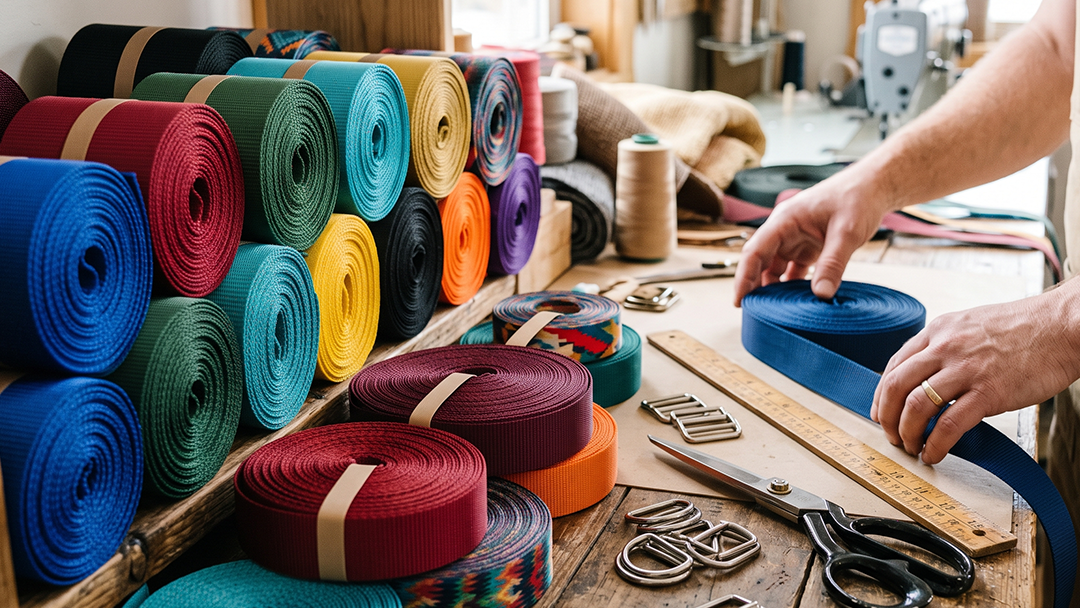
Nylon webbing is the first thing most collar makers reach for, and that's not an accident. It offers a combination of strength, flexibility, affordability, and availability that makes it genuinely practical for most collar applications.
It handles moisture reasonably well, drying faster than natural fibers and resisting the mildew problems that plague cotton or hemp in wet environments. It's strong for its weight, which means you're not sacrificing security by using a collar that sits comfortably against a dog's neck. It also takes color well, which is why nylon webbing comes in the widest range of prints and solids you'll find anywhere.
The limitation to understand is UV degradation. Nylon breaks down with prolonged sun exposure. It's not a catastrophic or quick process, but over time, a collar that lives outside will show it. For a dog that spends most of its time indoors with outdoor walks, this is rarely a meaningful issue. For a working dog or a dog with all-day outdoor access, it becomes worth considering.
Quality varies a lot within nylon webbing, more than most buyers realize until they've worked with both ends of the spectrum. Tighter, more consistent weaves hold their shape and strength longer. Looser construction wears through faster and frays more aggressively at cut edges. When you're evaluating nylon webbing, look for even color distribution across the full width, a tight weave without visible loose threads, and edges that feel finished rather than rough.
Polyester Webbing: Built for Outdoor Exposure
Polyester webbing doesn't get as much attention as nylon in the collar-making world, but it earns serious consideration for certain applications, and at Country Brook Craft Supply we stock both precisely because they're not interchangeable.
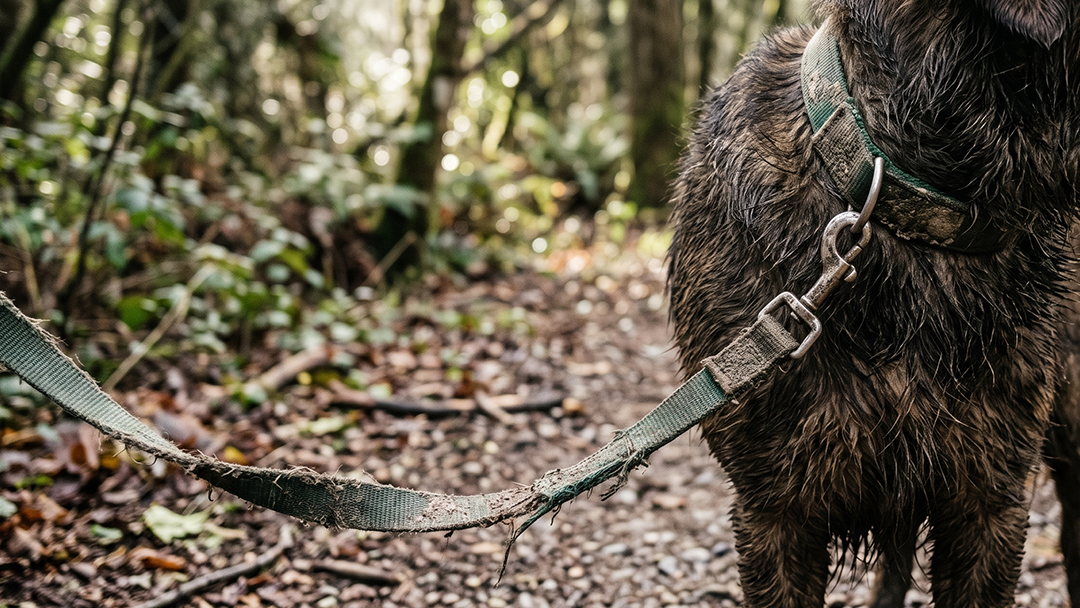
The central advantage is UV resistance. Polyester doesn't break down under sunlight the way nylon does, which makes it the stronger choice for dogs with extensive outdoor lifestyles or for makers in climates where collars get heavy sun exposure year-round. A well-made polyester collar can look and perform like a new collar years into its working life in ways that nylon simply can't match.
Polyester also resists moisture absorption better than nylon. When soaked, nylon loses a small percentage of its tensile strength. That's not enough to cause failure under normal use, but it's a real difference when you're comparing materials. Polyester stays closer to its dry strength when wet and is less hospitable to mildew even in persistently damp conditions.
The tradeoff is that polyester has slightly less drape and flexibility than nylon, which can matter when you're working with specific hardware or trying to get a collar to conform to a particular neck shape. For standard flat collar construction, this is rarely a practical problem. It's a material characteristic worth understanding, not a disqualifier.
Polypropylene: The Budget Option With Limitations
Polypropylene webbing comes up in collar-making conversations mostly because of its price point. It costs less than nylon or polyester, which makes it look attractive on a budget spreadsheet.
The material has legitimate uses. It's lightweight, resists water completely (it floats, which is why it's the standard for marine applications), and holds up well against chemicals and mildew. For certain specific applications, such as a training collar that will only be used in short sessions or a temporary collar for a foster dog, polypropylene can be a reasonable choice.
For everyday-wear dog collars, though, the limitations are real. Polypropylene has a lower melting point than nylon or polyester, which creates problems when you're sealing cut edges with a hot knife. The edge can melt unevenly or become misshapen before it seals properly. Its abrasion resistance is lower than either of the better materials, meaning it wears through faster with daily use. And it tends to feel rougher against skin and fur, which matters for a collar that a dog is wearing sixteen hours a day.
The faster fading is also notable. Polypropylene doesn't hold color as well as nylon or polyester, and a collar that looks noticeably faded sends a signal about construction quality whether or not the underlying structure has failed.
Width and Thickness: Getting the Proportions Right
Choosing the right webbing material and then putting it in the wrong width is one of the most common mistakes in collar construction. The proportions matter both for the dog's comfort and for how the collar functions under stress.
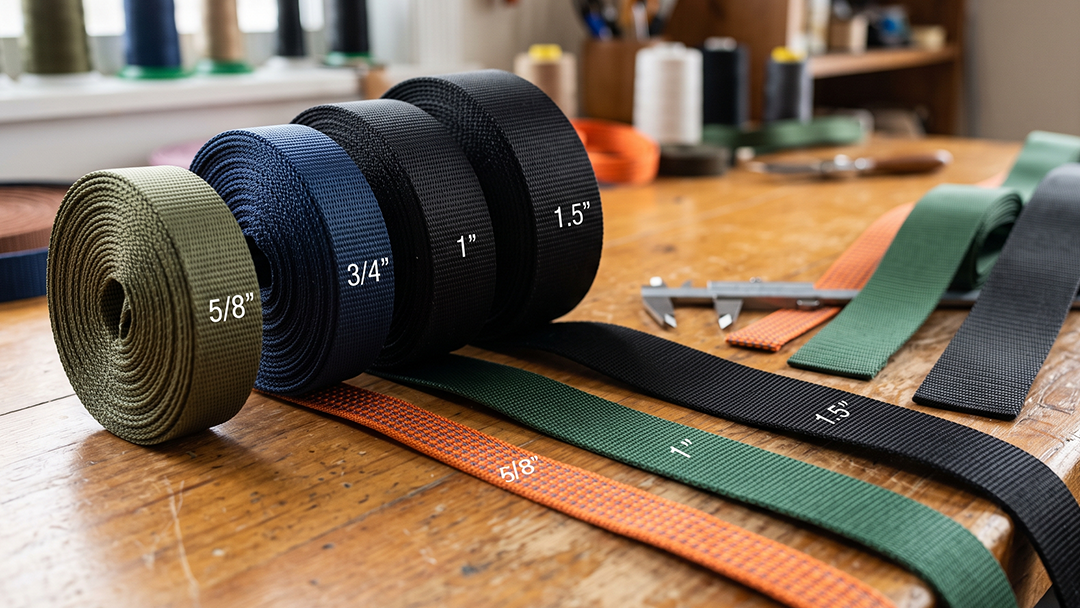
Narrow webbing concentrates pressure on a smaller area of the neck, which becomes uncomfortable during a walk and can cause irritation with repeated wear. Webbing that's too wide for the dog's neck creates a collar that doesn't conform well, sits awkwardly, and can restrict movement. For small dogs and puppies, 5/8-inch webbing is typically appropriate. Medium dogs generally work well with 3/4-inch to 1-inch webbing. Large and extra-large dogs need 1-inch to 1.5-inch webbing to distribute load properly and maintain proportion.
Thickness is less discussed but equally relevant. Standard webbing runs roughly 1.2mm to 2mm thick. Thicker webbing offers more durability and a more substantial feel, but less flexibility. Thinner webbing is easier to work with and conforms more naturally to a curved neck, but wears faster under heavy use. For most collars, a medium-weight webbing in the right width is the right call. Extra-thick webbing makes sense for working dogs or extremely strong pullers where durability has to take priority over everything else.
After more than two decades of supplying collar makers, the pattern we see is that makers learning the craft tend to underbuy on width relative to the dog's size. When in doubt, go wider rather than narrower.
What Experienced Makers Look For
After a few dozen collars, you develop an eye and a hand for what good webbing actually looks like before it's sewn into anything.
Edge quality is one of the first things to assess. Quality webbing has clean, dense edges that don't unravel when cut and seal predictably with a heat tool. Inconsistent edge density is usually a sign of lower-grade construction, and it shows up downstream in the finished collar.
Color consistency matters more than people expect. Webbing should carry even color across its full width and along its full length. Streaking or variation typically points to inconsistent dyeing, and inconsistent dyeing often correlates with other quality shortcuts in the manufacturing process.
The hand feel, meaning how the webbing behaves when you hold it and work with it, tells you a lot. Good webbing has substance without stiffness. It holds a fold when you need to form a loop. It feeds through a sewing machine without bunching or dragging. It seals cleanly with a hot knife. These aren't secondary considerations. They affect both the quality of the finished collar and the efficiency of making it.
A Note for Makers Who Care How Things Are Made
Dog collar making has developed a real community around it, made up of people who are thinking carefully about materials, construction methods, and what it means to make something that will be used daily and trusted completely. If that's where you're coming from, a few things are worth knowing.
Both nylon and polyester webbing are synthetic materials, and for makers thinking about sustainability, that's a real consideration. What we can offer is transparency about where our webbing comes from and how it's made, and the honest observation that a well-constructed collar that lasts five or six years represents a much lower environmental cost than three or four cheaper ones. Material quality and construction quality are the foundation of slow-made goods, and the webbing decision is where that starts.
For the maker who wants to know what they're working with before it arrives, we're a phone call away from the Moulton shop. That's been true for twenty-two years.
Frequently Asked Questions
What is the strongest webbing material for dog collars?
Both nylon and polyester offer excellent tensile strength for collar applications. Nylon has slightly higher breaking strength in dry conditions. Polyester maintains its strength more consistently when wet and after extended UV exposure. For most dogs, either material is more than adequate when the collar is properly constructed. The more meaningful strength question is usually about construction quality rather than material.
How do I prevent webbing from fraying when I cut it?
Seal synthetic webbing edges immediately after cutting using a hot knife or a brief pass with a lighter flame. The heat fuses the synthetic fibers at the cut edge and prevents unraveling. Work in a ventilated space and move quickly. You're sealing, not scorching. This is one of the areas where polypropylene is more difficult to work with, since its lower melting point makes consistent edge sealing harder.
Does webbing color affect durability?
Not directly. Darker colors tend to show fading less visibly than lighter colors as sun exposure accumulates, so there's a practical advantage to darker webbing for outdoor use, but color choice doesn't affect the structural integrity of quality webbing.
Can I wash collars made with nylon or polyester webbing?
Yes. Hand washing with mild soap and air drying is the gentler approach. Machine washing is possible but accelerates wear on hardware and stitching faster than on the webbing itself. Remove any tags or add-ons before washing.
What webbing width should I use for a puppy collar?
3/8-inch or 5/8-inch webbing works for small puppies depending on the breed's expected adult size. Because puppies grow so quickly, many makers build adjustable collars with enough range to last through the growth phase rather than making multiple collars in sequence.
Troy has helped Country Brook Craft Supply support their community of makers, crafters, sewers, small businesses, and DIYers from the Moulton, Alabama shop for over 15 years.


