
Essential Guide to Webbing Hardware for Makers
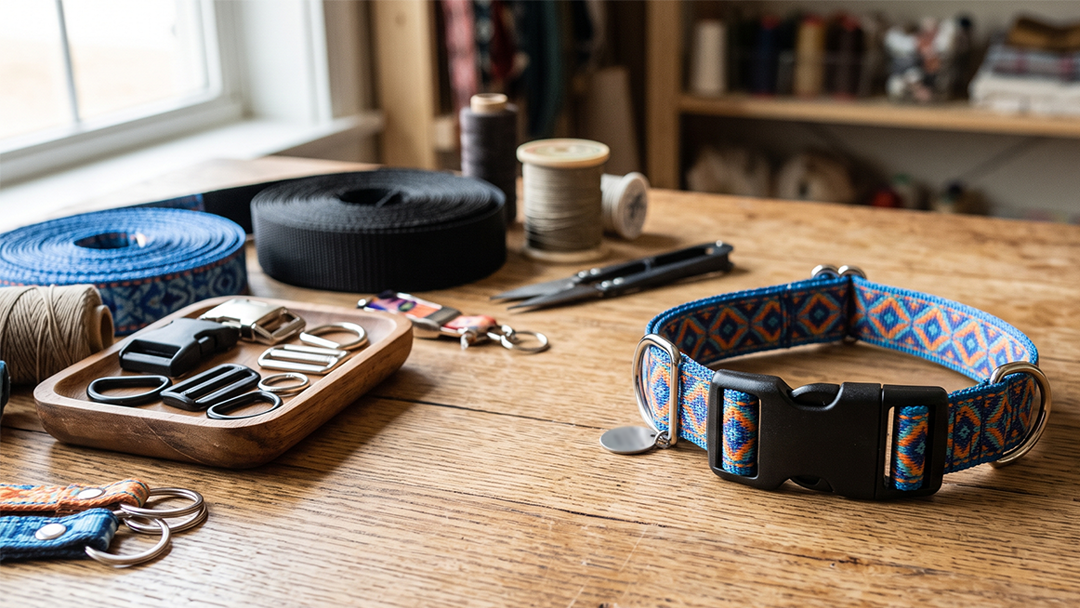
A woman came into our Moulton shop a few years back with a half-finished dog collar she'd built beautifully. Good webbing, clean stitching, real care put into it. She had a side release buckle that kept popping open when her Lab hit the end of the leash. She hadn't done anything wrong, exactly. She'd just grabbed the buckle that looked right without knowing what the hardware was actually designed to do. Twenty minutes of conversation, a swap to the correct hardware combination, and her collar worked the way she'd imagined it from the start.
That's the gap this guide is meant to close. Not a crash course in everything at once, but a clear look at what each piece of webbing hardware actually does, why it exists, and which problems it's built to solve.
Understanding Hardware Functions
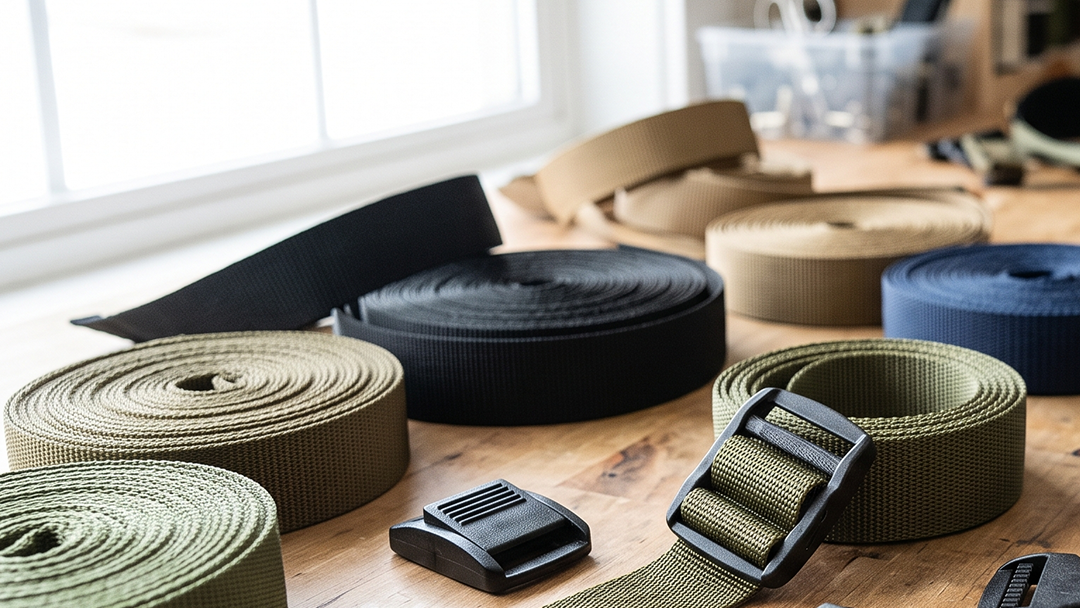
The easiest way to get your bearings in the hardware aisle is to stop thinking about names and start thinking about functions. Every piece of webbing hardware does one of four things: it connects, it adjusts, it secures, or it releases quickly. Once you know which of those your project needs, the options narrow fast.
Connecting hardware joins webbing to itself or to another object. D-rings, O-rings, and rectangle rings all fall here. No moving parts, no adjustability. Just a reliable attachment point. You'll find them anchoring bag straps, leash handles, and belt hardware.
Adjusting hardware lets you change strap length without cutting or resewing. Sliders, tri-glides, and ladder locks do this job. They're essential whenever your project needs to fit different sizes or body types. Think of an adjustable collar, a cross-body bag strap, or a pack that has to fit multiple people.
Securing hardware holds tension under load. Cam buckles and ratchet buckles lock webbing in place and don't let go until you release them intentionally. Tie-down straps, cargo securing, and gear cinching are their territory.
Quick-release hardware does exactly what it sounds like. Side release buckles are the most common example. They're built for repeated, fast on-and-off use: pet collars, bag closures, anything someone puts on and takes off daily.
Some hardware combines more than one function. A side release buckle with integrated adjustment slots handles both quick-release and length change. Knowing the primary function you need is the fastest way to cut through the noise.
Side Release Buckles
Side release buckles are probably the first piece of webbing hardware you ever touched. They're on backpacks, luggage straps, dog collars, safety vests, and just about anything else that needs to open and close quickly. Two parts make up the design: a male end that clicks into a female end, with tabs on the sides to release.
They're everywhere because they work. Intuitive, fast, and secure until deliberately opened.
When you're choosing one, webbing width is the first number that matters. A buckle made for one-inch webbing is made for one-inch webbing. Run three-quarter-inch through it and you'll have slop. Run one-and-a-half-inch through it and it won't fit at all. The webbing should move through the slots cleanly but without play.
After width, think about load. Plastic buckles in standard grades handle everyday bags, light collars, and casual use without issue. For hiking packs, working-dog gear, or anything that sees serious stress, step up to high-strength polymer or metal. Over twenty years of stocking this hardware, we've seen plenty of projects fail not because the webbing gave out but because the buckle wasn't rated for what the maker was asking it to do.
One thing beginners get tripped up on: side release buckles are not primarily adjustment hardware. They excel at quick-release. If you also need length adjustment, look for models with built-in ladder slots, or pair the buckle with a separate slider. Don't ask one piece of hardware to do a job it wasn't designed for.
Sliders and Tri-Glides
Sliders go by a few names, including tri-glides and three-bar slides, but the design and the job are the same. Three bars form a rectangular frame. You thread webbing through the center bar, fold it back, and run it under the outer bar. Friction does the rest. The webbing stays put under normal use but slides freely when you want to adjust.
This simple mechanism is behind most of the adjustable straps you interact with every day. Dog collars that fit through puppyhood and into adulthood. Bag straps that switch between shoulder and cross-body carry. Apron ties, camera straps, and pack chest straps all rely on the same principle.
Fit is everything with sliders. The center bar needs to be wide enough that doubled webbing, meaning two layers of the material, passes under it smoothly. Too tight and the slider binds and drags. Too loose and the webbing creeps under tension. When customers bring in adjustable projects that keep slipping, the cause is almost always a size mismatch between the slider and the webbing.
Material matters less here than it does with buckles because sliders don't typically carry the same load. Plastic sliders handle most applications without complaint. Metal sliders add durability and a visual weight that some makers specifically want, particularly on leather-and-webbing combination pieces where the hardware is part of the aesthetic.
One honest limitation: sliders are friction-hold only. They don't lock. For the vast majority of adjustable-strap projects, that's completely fine. For anything where slippage under real load is a safety concern, you want cam buckles or ladder locks instead.
D-Rings and Rectangle Rings
D-rings and rectangle rings are the quiet workhorses of any webbing project. No moving parts, no mechanisms, no adjustment. They create an attachment point, and that single function shows up in nearly every project category we see come through Moulton.
The shape tells you the name. D-rings have the curved profile of the letter D. Rectangle rings are exactly that. Both do the same fundamental job: you thread webbing through them to build a loop, anchor a strap, or create a connection point for additional hardware or carabiners.
Choosing between them is often an aesthetic call. D-rings sit slightly flatter when sewn into a project because the curve distributes pressure across more surface area. Rectangle rings give a cleaner, more geometric look that some makers prefer, especially on structured bags or modern accessory work.
Welded versus unwelded is a distinction that actually matters for anything load-bearing. Welded rings are formed from one continuous piece of metal, with the seam fused closed. Unwelded rings have a small gap where the metal ends meet. For decorative applications or light-duty use, unwelded rings are fine. For anything that could see real stress, such as heavy bags, working gear, or safety applications, welded is the only reasonable choice. That gap in an unwelded ring is a weak point, and weak points fail at the worst moments.
Material covers the rest of the decision. Steel for maximum strength. Brass for a classic finish with solid durability. Aluminum when weight is a factor. Plastic for decorative projects where nothing load-bearing is at stake. We carry all of these because the right ring for a hiking pack is not the right ring for a market tote, even if they look similar on the shelf.
Cam Buckles and Ladder Locks
Cam buckles and ladder locks share a common principle: webbing can move through them in one direction but locks tight when tension pulls the other way. That locking quality is exactly what you want when you need something to stay cinched.
Cam buckles use a spring-loaded rotating cam that presses into the webbing as tension increases. The harder the pull, the tighter the grip. Release the cam and the webbing moves freely again. This makes them ideal for tie-down straps, kayak roof racks, equipment bundling, and any situation where you're cinching against a load that pushes back.
Ladder locks work through a series of teeth, often called the ladder, that bite into the webbing when it's pulled tight. Release requires pulling the webbing at a specific angle to disengage. They hold securely without the spring mechanism, which makes them a solid choice for adjustable straps that need to stay exactly where you set them, such as backpack shoulder straps, adjustable handles, and load-bearing bag straps.
The practical difference for project selection comes down to how much tension you need and how often you'll be resetting. Cam buckles are better for high-tension, frequent-adjustment scenarios. Ladder locks are better for set-it-and-leave-it adjustable straps.
One thing worth being direct about: both can damage webbing if the weight category is mismatched. Using heavy-duty cam buckle hardware on lightweight nylon webbing will eventually tear or deform the material. Match the hardware's strength rating to the webbing's strength, and don't push either past its working load limit.
A Note for the Slow Maker
If you're approaching webbing hardware from a craft-first perspective, building things intentionally and thinking about materials and process as part of the work, this category rewards that kind of attention. Hardware choice is one of the places where slow making and good making completely overlap.
A slider that fits the webbing precisely, a D-ring with the right finish for the leather you're pairing it with, a side release buckle that actually matches the load it's going to carry. These aren't just functional decisions. They're the difference between a finished piece that holds up for years and one that starts apologizing for itself in the first month of real use.
We've worked with makers who source their hardware the same way they source their fabric or their thread: with intention. That kind of care shows in finished work. It's also one of the reasons we try to keep our hardware selection honest and specific rather than just broad and cheap. A piece that comes off the shelf in Moulton should be something you're proud to build with.
Putting It All Together
Hardware choice follows function. Start there and work outward.
Identify the primary thing your project needs to do. Quick-release means side release buckles. Length adjustment means sliders or ladder locks. Tension-holding means cam buckles. Fixed attachment means D-rings or rectangle rings. Most projects need more than one function, which means more than one hardware type working together. An adjustable dog collar combines a slider with a side release buckle. A shoulder bag brings together sliders, D-rings, and possibly a side release closure.
Sizing is non-negotiable. Measure your webbing width and match hardware exactly to that measurement. Hardware that's too small won't accept the webbing. Hardware that's too large allows slippage and looks unfinished on the completed project.
Material follows from the load and the look. Plastic handles everyday projects well and costs less. Metal adds strength, durability, and weight, both literal and visual. Choose based on what the project will actually face in use.
Then think about the person using it. Will they be operating this hardware one-handed, in cold weather, while managing a dog that weighs more than they do? The best hardware choice works intuitively for the person it's built for, not just for the bench where it was assembled.
Frequently Asked Questions
What size hardware do I need for 1-inch webbing?
Hardware specifically rated for one-inch webbing. The webbing should sit snugly in the slots, not forced and not sloppy. Product specifications will state the compatible webbing width. When a listing shows a range, test with your actual webbing before committing to a large quantity.
Can I use plastic buckles for heavy-duty applications?
Sometimes. Many plastic buckles carry real working load ratings and perform well on backpacks, pet gear, and everyday bags. For applications with extreme loads, prolonged UV exposure, significant temperature swings, or anything safety-critical, metal is the better call. Check the working load limit on the specific buckle, not just the material category.
How do I know if a D-ring is strong enough for my project?
Look at three things: material, size, and whether it's welded. Larger welded steel rings are substantially stronger than small unwelded brass or aluminum ones. Reputable suppliers list working load limits. For non-critical applications like a tote bag strap anchor, standard D-rings are almost always more than adequate. For anything where failure matters, check the spec sheet.
What's the difference between a slider and a ladder lock?
Both adjust strap length, but through different mechanisms. Sliders use friction from doubled-back webbing. Ladder locks use teeth that grip the webbing surface. Ladder locks hold more positively under load. Sliders are simpler to thread and adjust for most makers just getting started. For adjustable straps without extreme tension requirements, sliders are usually the easier entry point.
Can I mix metal and plastic hardware on the same project?
Yes. A bag can have plastic side release buckles at the closure and steel D-rings at the strap attachment without any problem. What matters is that each individual piece is appropriate for its specific function and load. Visual consistency is a design choice, not a structural requirement. Make sure each piece can handle its own job, and the combination will be fine.
Troy has helped Country Brook Craft Supply support their community of makers, crafters, sewers, small businesses, and DIYers from the Moulton, Alabama shop for over 15 years.


